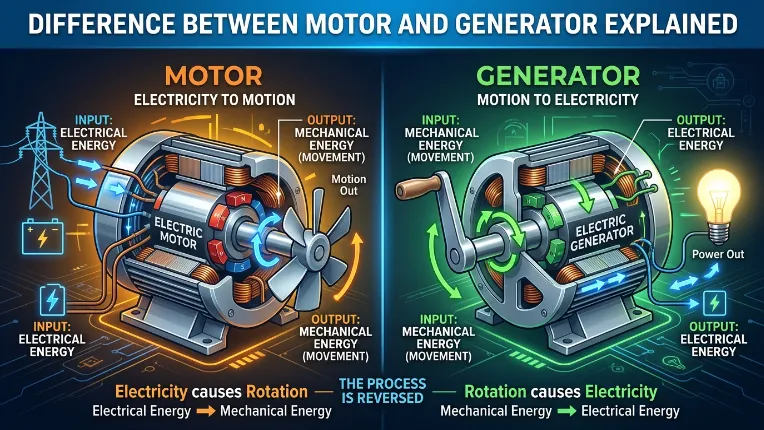
The difference between motor and generator is that a motor converts electrical energy into mechanical energy, while a generator converts mechanical energy into electrical energy.
Imagine a fan running in your room during a hot day. Electricity enters the device, and the blades start spinning. Now imagine a power plant where large machines rotate to produce electricity for thousands of homes. Both situations involve important electrical machines. However, they perform opposite tasks. This simple example helps explain the difference between motor and generator.
The difference between motor and generator mainly lies in energy conversion. A motor uses electricity to produce motion or mechanical work. A generator uses motion to produce electricity. Understanding the difference between motor and generator is important for students of physics and engineering. When people learn the difference between motor and generator, they can better understand how electrical systems, power plants, and household appliances work.
Key Difference Between the Both
The main difference between motor and generator is the direction of energy conversion.
- Motor converts electrical energy into mechanical energy.
- Generator converts mechanical energy into electrical energy.
Why Is Their Difference Necessary to Know?
Understanding the difference between motor and generator is essential for students, engineers, and technicians. These machines play a major role in modern technology. Motors operate many household devices such as fans, washing machines, and electric vehicles. Generators produce electricity in power stations and backup systems.
For professionals in electrical engineering, knowing the difference between motor and generator helps in designing efficient machines and energy systems. In society, this knowledge supports better understanding of electricity generation and its applications in daily life.
Pronunciation
| Word | US Pronunciation | UK Pronunciation |
| Motor | /ˈmoʊtər/ | /ˈməʊtə/ |
| Generator | /ˈdʒɛnəreɪtər/ | /ˈdʒɛnəreɪtə/ |
Linking Hook:
Let us now examine the detailed difference between motor and generator in different aspects of electrical machines.
Difference Between the Generator and Motor
1. Energy Conversion
Motor: Converts electrical energy into mechanical motion.
Examples:
- Electric fan motors rotating blades.
- Washing machine motors spinning drums.
Generator: Converts mechanical motion into electrical energy.
Examples:
- Hydroelectric generators producing electricity.
- Backup generators during power outages.
2. Working Principle
Motor: Works on electromagnetic force that creates rotation.
Examples:
- Current flowing through motor coils.
- Magnetic field causing rotor movement.
Generator: Works on electromagnetic induction.
Examples:
- Rotating coils generating electric current.
- Turbines spinning generator shafts.
3. Input Energy
Motor: Requires electrical input.
Examples:
- Electricity powering an electric drill.
- Current driving a ceiling fan motor.
Generator: Requires mechanical input.
Examples:
- Wind turbines turning generators.
- Engines rotating portable generators.
4. Output Energy
Motor: Produces mechanical motion.
Examples:
- Motors moving conveyor belts.
- Motors operating pumps.
Generator: Produces electrical power.
Examples:
- Generators supplying electricity to homes.
- Emergency generators in hospitals.
5. Application Areas
Motor: Used in appliances and machines.
Examples:
- Electric vehicles using motors.
- Industrial machinery powered by motors.
Generator: Used in power generation systems.
Examples:
- Power plants generating electricity.
- Portable generators for backup power.
6. Direction of Energy Flow
Motor: Energy flows from electrical source to mechanical system.
Examples:
- Battery powering an electric scooter motor.
- Electricity driving factory equipment.
Generator: Energy flows from mechanical system to electrical output.
Examples:
- Water turbines producing electricity.
- Gas engines driving generators.
7. Use in Daily Life
Motor: Common in household devices.
Examples:
- Blender motors mixing food.
- Air conditioner motors running compressors.
Generator: Common in power supply systems.
Examples:
- Backup generators for buildings.
- Diesel generators in construction sites.
8. Power Source
Motor: Uses electricity from power supply.
Examples:
- Grid electricity running household motors.
- Battery power running small motors.
Generator: Uses mechanical force from engines or turbines.
Examples:
- Wind turbines spinning generators.
- Steam turbines powering generators.
9. Mechanical Movement
Motor: Produces rotational motion.
Examples:
- Motor shafts spinning machine parts.
- Motor-driven wheels in electric vehicles.
Generator: Requires rotation to operate.
Examples:
- Rotating generator coils producing electricity.
- Turbines spinning generator rotors.
10. Role in Energy Systems
Motor: Consumes electricity to perform work.
Examples:
- Motors driving industrial machines.
- Motors powering household appliances.
Generator: Produces electricity for distribution.
Examples:
- Generators in hydroelectric dams.
- Generators supplying electricity to cities.
Nature and Behaviour
Motor:
A motor acts as a device that produces motion. It converts electrical power into mechanical movement. Motors are commonly used in machines, vehicles, and appliances.
Generator:
A generator acts as a device that produces electricity. It converts mechanical motion into electrical energy. Generators are essential in power stations and backup power systems.
Why People Are Confused About Their Use?
People often confuse motors and generators because both are electrical machines with similar internal parts. In some cases, the same machine can work as either a motor or a generator depending on how it is used.
Difference and Similarity Table
| Aspect | Motor | Generator | Similarity |
| Energy conversion | Electrical to mechanical | Mechanical to electrical | Both convert energy |
| Function | Produces motion | Produces electricity | Both electrical machines |
| Input | Electrical energy | Mechanical energy | Both involve electromagnetic principles |
| Output | Mechanical motion | Electric current | Both used in industries |
| Application | Appliances and machines | Power generation | Both essential technologies |
Which Is Better in What Situation?
Motor:
A motor is better when mechanical movement is required. Devices such as fans, pumps, and vehicles rely on motors to produce motion. Motors are essential in many everyday appliances and industrial machines.
Generator:
A generator is better when electricity needs to be produced. Power plants, wind turbines, and backup power systems rely on generators to generate electrical energy for homes, industries, and cities.
Metaphors and Similes
Motor (Positive / Neutral)
Meaning: driving force behind an action.
Examples:
- “Innovation is the motor of economic growth.”
- “Curiosity acts like a motor for learning.”
Generator (Positive)
Meaning: source or creator of something.
Examples:
- “Education is a generator of new ideas.”
- “Creativity works like a generator of solutions.”
Idioms or Expressions
- Motor along – move or progress quickly.
Example: The project motored along after the team solved the problem. - Idea generator – someone who produces many ideas.
Example: She is the main idea generator in the company.
Works in Literature
- “Electric Machinery Fundamentals” – Engineering, Stephen J. Chapman, 1985
- “Introduction to Electric Machines” – Engineering, Bernard Adkins, 1975
Movies Related to Electricity and Technology
- “The Current War” – 2017, USA
- “Edison” – 2005, USA
Frequently Asked Questions
1. What is the main difference between motor and generator?
A motor converts electrical energy into motion, while a generator converts motion into electricity.
2. Can a motor work as a generator?
Yes. Some machines can operate as both depending on the direction of energy flow.
3. Where are motors used?
Motors are used in appliances, vehicles, and industrial machines.
4. Where are generators used?
Generators are used in power plants and backup electricity systems.
5. Which device produces electricity?
A generator produces electrical energy.
How Both Are Useful for Surroundings
Motors and generators are essential for modern technology. Motors power machines and appliances that make daily life easier. Generators produce the electricity needed to run homes, industries, and cities. Together, they support energy systems and technological development.
Conclusion
Understanding the difference between motor and generator helps people understand how energy is converted and used in modern systems. A motor converts electrical energy into mechanical motion, which powers many machines and devices.
A generator performs the opposite function by converting mechanical energy into electrical power. Both machines play crucial roles in industry, transportation, and everyday appliances. Learning the difference between motor and generator helps students and professionals appreciate the technology that supports modern life.
Difference Between Resonator and Muffler:Explained For 2026

I’m Ethan Caldwell, a language enthusiast who enjoys simplifying confusing English word pairs for everyday readers. At Hubdifference.com, I write clear and practical comparisons that help users choose the right word with confidence. My goal is to remove confusion and make English learning simple, useful, and accessible. I believe the right words create better communication.