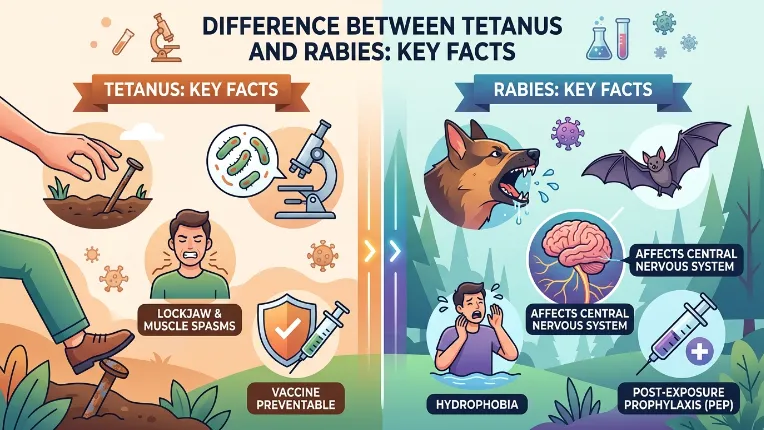
The difference between tetanus and rabies is that tetanus is a bacterial infection entering through wounds and causing muscle spasms, while rabies is a viral infection transmitted through infected animal bites that affects the brain.
Imagine a child playing outside who accidentally steps on a rusty nail. His parents immediately worry about tetanus. On another day, a person gets bitten by a stray dog, and people quickly become concerned about rabies. These two situations are common in real life and show why understanding the difference between tetanus and rabies is important.
Although both diseases are serious and require immediate medical attention, the difference between tetanus and rabies lies in their causes, transmission, and effects on the human body. Tetanus occurs when bacteria enter the body through contaminated wounds, while rabies spreads through the saliva of infected animals, usually via bites. Knowing the difference between tetanus and rabies helps people take the right precautions and seek proper treatment quickly.
Key Difference Between Tetanus and Rabies
The main difference between tetanus and rabies is their cause and transmission method.
- Tetanus is caused by bacteria entering the body through wounds.
- Rabies is caused by a virus transmitted through the bite of an infected animal.
Why It Is Important to Know the Difference
Understanding the difference between tetanus and rabies is essential for personal safety and public health. Both diseases are potentially life-threatening if not treated quickly. However, the way they spread and the treatment methods are very different.
Tetanus prevention mainly focuses on vaccination and proper wound care. Rabies prevention involves avoiding animal bites and receiving immediate medical treatment after exposure. Recognizing the difference between tetanus and rabies helps individuals respond correctly to injuries and protects communities from dangerous infections.
Pronunciation (US & UK)
| Disease | US Pronunciation | UK Pronunciation |
| Tetanus | /ˈtɛtənəs/ | /ˈtɛtənəs/ |
| Rabies | /ˈreɪbiːz/ | /ˈreɪbiːz/ |
Linking Hook:
Now that we understand the basics, let’s explore the detailed difference between tetanus and rabies.
Difference Between Tetanus and Rabies
1. Cause of Disease
Tetanus is caused by the bacterium Clostridium tetani. Rabies is caused by the rabies virus.
Examples:
- A rusty nail wound may introduce tetanus bacteria.
- A bite from an infected dog may transmit rabies.
2. Type of Infection
Tetanus is a bacterial infection, while rabies is a viral infection.
Examples:
- Tetanus bacteria release toxins affecting muscles.
- Rabies virus attacks nerve cells and the brain.
3. Mode of Transmission
Tetanus usually enters through wounds or cuts. Rabies spreads through bites or scratches from infected animals.
Examples:
- A deep puncture wound contaminated with soil may cause tetanus.
- A bite from a bat or dog may spread rabies.
4. Affected Body System
Tetanus mainly affects muscles and nerves. Rabies primarily affects the brain and central nervous system.
Examples:
- Tetanus causes muscle stiffness and spasms.
- Rabies causes neurological symptoms such as confusion.
5. Symptoms
Symptoms of tetanus include muscle rigidity and painful spasms. Rabies symptoms include fever, agitation, and fear of water.
Examples:
- Tetanus may cause “lockjaw.”
- Rabies patients may develop hydrophobia.
6. Source of Infection
Tetanus bacteria live in soil, dust, and animal waste. Rabies virus lives in the saliva of infected animals.
Examples:
- Gardening without protection may expose someone to tetanus.
- A bite from a stray dog may spread rabies.
7. Prevention
Tetanus prevention relies on vaccination and wound care. Rabies prevention involves vaccination and immediate treatment after bites.
Examples:
- Tetanus booster shots protect against infection.
- Rabies vaccines are given after animal bites.
8. Incubation Period
Tetanus symptoms usually appear within days to weeks. Rabies symptoms may appear weeks or even months later.
Examples:
- Tetanus may develop within 3–10 days.
- Rabies symptoms may appear long after an animal bite.
9. Fatality Rate
Both diseases are dangerous, but rabies is almost always fatal after symptoms appear.
Examples:
- Early treatment improves tetanus survival.
- Untreated rabies nearly always leads to death.
10. Medical Treatment
Tetanus treatment involves antitoxin therapy and antibiotics. Rabies treatment focuses on vaccination before symptoms begin.
Examples:
- Doctors give tetanus immunoglobulin to neutralize toxins.
- Rabies post-exposure prophylaxis prevents infection.
Nature and Behaviour of Both
Tetanus:
- Bacterial disease
- Causes severe muscle spasms
- Enter through contaminated wounds
Rabies:
- Viral disease
- Attacks brain and nerves
- Spread through infected animal bites
Why Are People Confused About Their Use?
People sometimes confuse the difference between tetanus and rabies because both diseases are linked to injuries and both can be prevented with vaccines. Additionally, both require urgent medical care after exposure. However, their causes and methods of transmission are very different.
Difference and Similarity Table
| Feature | Tetanus | Rabies | Similarity |
| Cause | Bacteria | Virus | Life-threatening diseases |
| Transmission | Wounds | Animal bites | Preventable by vaccines |
| Body System | Muscles and nerves | Brain and nervous system | Require quick treatment |
| Source | Soil and dust | Infected animals | Medical emergencies |
| Treatment | Antitoxin and antibiotics | Post-exposure vaccine | Need early care |
Which Is More Dangerous in What Situation?
Tetanus is more dangerous when someone has a deep or contaminated wound and has not received a recent tetanus vaccination. Without treatment, muscle spasms can become severe and life-threatening.
Rabies is more dangerous after bites from infected animals such as dogs, bats, or raccoons. Once rabies symptoms appear, the disease is almost always fatal, making early vaccination critical.
Metaphors and Similes
- Tetanus as a “muscle lock.”
Example: Tetanus acts like a lock that tightens the muscles painfully. - Rabies as a “silent traveler.”
Example: Rabies travels quietly through nerves before reaching the brain.
Connotative Meaning
Tetanus
- Negative: painful and dangerous infection
- Neutral: bacterial disease
Rabies
- Negative: deadly neurological disease
- Neutral: viral infection
Idioms Related to Health
- Prevention is better than cure
Example: Vaccination against tetanus and rabies proves that prevention is better than cure. - Health is wealth
Example: Protecting yourself from infections shows that health is wealth. - An ounce of prevention is worth a pound of cure
Example: Early vaccination prevents diseases like rabies.
Works in Literature Related to Disease
- The Plague – Albert Camus (1947), philosophical novel
- The Ghost Map – Steven Johnson (2006), medical history
Movies Related to Infectious Diseases
- Contagion – 2011, USA
- Outbreak – 1995, USA
- World War Z – 2013, USA
Frequently Asked Questions
1. What is the main difference between tetanus and rabies?
Tetanus is a bacterial infection entering through wounds, while rabies is a viral infection transmitted through infected animal bites.
2. Can tetanus spread from person to person?
No, tetanus does not spread between people.
3. Is rabies always fatal?
Rabies is almost always fatal once symptoms appear.
4. Are vaccines available for both diseases?
Yes, vaccines exist for both tetanus and rabies.
5. What should someone do after an animal bite?
They should clean the wound immediately and seek medical care for rabies vaccination.
How Both Are Useful for Public Awareness
Learning about tetanus and rabies helps communities promote vaccination, improve wound care practices, and reduce risks from animal bites or contaminated injuries.
Final Words
Both tetanus and rabies are dangerous but preventable diseases. Awareness and vaccination are the best protection against these infections.
Conclusion
The difference between tetanus and rabies mainly lies in their causes, transmission methods, and effects on the body. Tetanus is a bacterial infection that enters through contaminated wounds and causes severe muscle spasms.
Rabies is a viral infection spread through the bite of infected animals and primarily affects the brain and nervous system. Although both diseases can be fatal, they are preventable with proper vaccination and early medical care. Understanding the difference between tetanus and rabies helps individuals take quick action after injuries or animal bites and protects public health.
Ambivert vs Omnivert: What’s the Real Difference?

I’m Nathan Brooks, an independent writer passionate about vocabulary clarity and usage differences. On Hubdifference.com, I create easy-to-understand comparisons covering American and British English variations. I focus on simple language, practical tips, and reader-friendly explanations. Helping people write with clarity and confidence is what drives my work.