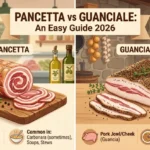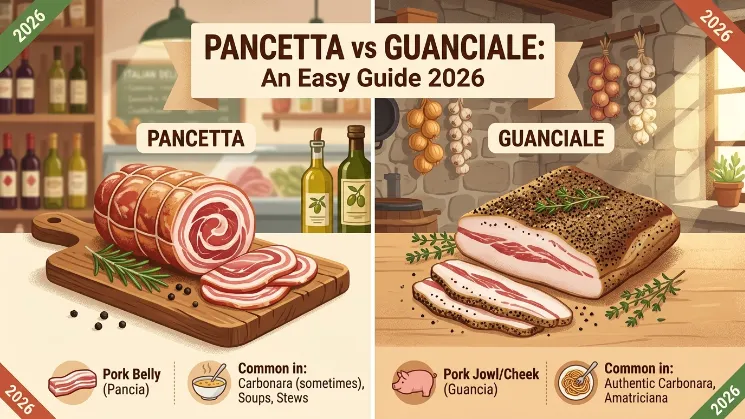
Pancetta and guanciale are both Italian cured pork, but pancetta comes from pork belly while guanciale comes from pork cheek, giving them different textures and flavors.
You’re cooking a classic pasta like carbonara. The recipe says guanciale, but your local store only has pancetta. Now you pause. Are they the same? Can you swap them?
This is exactly why people search for the difference between pancetta and guanciale. Both look similar. Both are cured meats. And both are used in Italian cooking. But they are not identical.
Understanding the difference between pancetta and guanciale helps you cook authentic dishes and avoid flavor mistakes. It also makes shopping easier. And honestly, it makes your food taste better.
Let’s break it down in the simplest way possible so you never get confused again.
Quick Difference
The difference between pancetta and guanciale is simple:
Pancetta is cured pork belly, while guanciale is cured pork cheek.
Example: In authentic carbonara, guanciale gives a richer, deeper flavor than pancetta.
Why This Difference Matters
This difference is not just technical. It affects real cooking results.
In food and lifestyle, choosing the right ingredient changes taste, texture, and authenticity. If you use pancetta instead of guanciale, your dish will still be good but not traditional.
For learners, it builds clarity. You understand ingredients better.
For cooking enthusiasts, it improves skills. You start cooking like an Italian chef instead of guessing.
In short, knowing the difference helps you make smarter and tastier decisions.
Detailed Comparison Between Both
1. Definition
Pancetta is salt-cured pork belly. Guanciale is salt-cured pork cheek.
Example: Pancetta looks like bacon. Guanciale looks thicker and fattier.
2. Cut of Meat
Pancetta comes from the belly. Guanciale comes from the cheek or jowl.
Example: Pork belly is layered. Pork cheek is dense and fatty.
3. Flavor Profile
Guanciale has a stronger, richer flavor. Pancetta is milder and slightly sweet.
Example: Carbonara made with guanciale tastes deeper than with pancetta.
4. Fat Content
Guanciale has more fat. Pancetta has less in comparison.
Example: Guanciale melts more when cooked, creating a silky sauce.
5. Texture
Pancetta is firmer. Guanciale becomes soft and tender when cooked.
Example: Guanciale pieces almost melt in pasta dishes.
6. Usage in Cooking
Pancetta is versatile. Guanciale is used in traditional Italian recipes.
Example: Pancetta is common in soups. Guanciale is key in carbonara and amatriciana.
7. Origin
Both are Italian, but guanciale is more traditional and regional.
Example: Guanciale is strongly linked to central Italy dishes.
8. Preparation Style
Pancetta is often rolled. Guanciale is usually flat.
Example: You’ll see pancetta in round slices, guanciale in slabs.
9. Interchangeability
They can be swapped, but results differ.
Example: Using pancetta instead of guanciale gives a lighter flavor.
10. Availability
Pancetta is easier to find globally. Guanciale is less common.
Example: Most supermarkets stock pancetta, but guanciale may require specialty stores.
Nature / Usage Context
Pancetta is flexible. You can use it in many dishes like salads, pasta, or soups.
Guanciale is more specific. It shines in traditional Italian recipes. It is chosen for its rich fat and bold taste.
Think of pancetta as a general-purpose ingredient. Guanciale is a specialty ingredient for authentic cooking.
Why People Get Confused
There are a few clear reasons:
First, they look similar. Both are cured pork and sliced thin.
Second, recipes sometimes substitute them without explanation.
Third, online content often mixes them up or simplifies too much.
Lastly, outside Italy, guanciale is less known, so people assume pancetta is the same thing.
Comparison Table
| Feature | Pancetta | Guanciale |
|---|---|---|
| Meaning | Cured pork belly | Cured pork cheek |
| Usage | General cooking | Traditional Italian dishes |
| Context | Versatile ingredient | Authentic recipes |
| Complexity | Mild flavor | Rich, intense flavor |
| Example | Pasta, soups | Carbonara, amatriciana |
| Key Difference | Belly cut | Cheek cut |
Which One Should You Use?
If you are cooking casually or experimenting, use pancetta. It is easier to find and still tastes good.
If you want authentic Italian flavor, especially in dishes like carbonara, choose guanciale. It gives the real taste.
In simple terms:
Convenience → Pancetta
Authenticity → Guanciale
Easy Understanding (Metaphor Section)
Think of pancetta like butter. Smooth, mild, and widely used.
Think of guanciale like ghee. Richer, deeper, and more intense.
Both work. But one gives a stronger traditional flavor.
Connotation / Tone
Pancetta feels casual and flexible in cooking.
Example: “Add pancetta to your salad for extra flavor.”
Guanciale feels more traditional and authentic.
Example: “Use guanciale for a true Italian carbonara.”
Idioms / Expressions
There are no specific idioms for pancetta or guanciale, but both are often mentioned in traditional Italian cooking discussions.
FAQs
1. What is the difference between pancetta and guanciale?
Pancetta is pork belly. Guanciale is pork cheek, with richer flavor and more fat.
2. Are they interchangeable?
Yes, but guanciale gives a stronger, more authentic taste.
3. Which one is better?
Guanciale is better for traditional dishes. Pancetta is better for convenience.
4. Where is each used?
Pancetta is used in many recipes. Guanciale is used in classic Italian pasta dishes.
5. What is a common mistake?
Assuming they taste the same. Guanciale is much richer.
Practical Use in Daily Life
In education, you understand ingredients better.
In cooking, you improve recipe accuracy and taste.
In communication, you sound more knowledgeable when discussing food.
In real life, you make better buying decisions at the store.
Final Thoughts
The difference between pancetta and guanciale is simple but important. One is belly, the other is cheek. One is mild, the other is rich.
Conclusion
Understanding the difference between pancetta and guanciale helps you cook smarter and eat better. Pancetta is versatile and easy to find. Guanciale is rich and traditional.
If you want convenience, go with pancetta. If you want authenticity, choose guanciale.
Now the next time you see these ingredients in a recipe, you won’t hesitate. You’ll know exactly what to use and why.

I’m Ethan Caldwell, a language enthusiast who enjoys simplifying confusing English word pairs for everyday readers. At Hubdifference.com, I write clear and practical comparisons that help users choose the right word with confidence. My goal is to remove confusion and make English learning simple, useful, and accessible. I believe the right words create better communication.