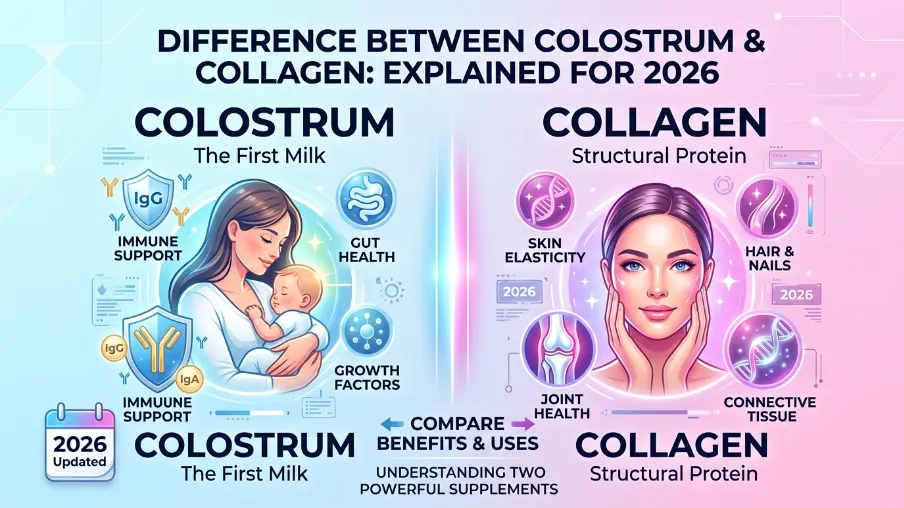
Colostrum and collagen are different substances with different purposes. Colostrum is nutrient-rich first milk that supports immunity and gut health, while collagen is a structural protein that supports skin, joints, bones, and connective tissues.
Colostrum = immune support and nutrition. Collagen = body structure and tissue support.
Imagine standing in a supplement store or scrolling online and seeing two popular products: colostrum powder and collagen peptides. Both claim benefits for health, recovery, skin, and wellness. That is where confusion begins.
Many people search for the difference between colostrum and collagen because they sound similar in the supplement world. They are often promoted by fitness influencers and wellness brands. Some people even assume they do the same job.
The truth is different. The difference between colostrum and collagen becomes clearer when you understand what they are made of and why people use them. Knowing the difference between colostrum and collagen helps you choose the right product for your goals instead of spending money on something that does not fit your needs.
Quick Difference
Colostrum is the first milk produced by mammals after birth. It contains antibodies, proteins, vitamins, and growth factors.
Collagen is the most abundant protein in the body and helps build skin, joints, bones, and tissues.
Real-world example: Someone wanting stronger skin and hair may choose collagen, while someone wanting immune or gut support may choose colostrum.
Why This Difference Matters
Understanding this difference matters because health products are often marketed in confusing ways.
For lifestyle decisions, choosing the wrong supplement may mean paying for benefits you do not actually need.
For science and health understanding, knowing their functions helps you understand how the body works.
For medical and wellness decisions, people may use collagen for aging skin or joint support, while colostrum may be considered for gut health and immune function.
Practical decisions become easier when you understand their separate roles.
Detailed Comparison
Definition
Colostrum: The first milk produced after childbirth, packed with nutrients and immune compounds.
Collagen: A protein that forms the framework of skin, bones, tendons, and tissues.
Example 1: A newborn receives colostrum naturally after birth.
Function or Purpose
Colostrum: Supports immune function and digestive health.
Collagen: Supports body structure and tissue repair.
Example 2: Athletes may take collagen for joint support.
Origin
Colostrum: Comes from mammals such as cows and humans.
Collagen: Comes from animal tissues like skin, bones, and fish scales.
Example 1: Bovine colostrum comes from cows.
Main Nutrients
Colostrum: Contains antibodies, proteins, vitamins, minerals, and growth factors.
Collagen: Contains amino acids such as glycine and proline.
Example 2: Collagen peptides are rich in structural amino acids.
Role in Immunity
Colostrum: Directly supports immune defenses through antibodies.
Collagen: Does not directly act as an immune booster.
Example 1: People interested in immune support often consider colostrum.
Effect on Skin
Colostrum: May indirectly help overall health.
Collagen: Mainly supports skin elasticity and firmness.
Example 2: Beauty supplements frequently include collagen.
Gut Health
Colostrum: Commonly used for digestive and gut support.
Collagen: May help gut lining support but is not mainly designed for immunity.
Example 1: Someone with digestive concerns may prefer colostrum.
Structure
Colostrum: A complex nutrient-rich fluid.
Collagen: A fibrous protein structure.
Example 2: One is a milk-based substance while the other is a body protein.
Interchangeability
Colostrum: Cannot replace collagen.
Collagen: Cannot replace colostrum.
Example 1: Using collagen for immune support would not provide colostrum antibodies.
Real-World Application
Colostrum: Used in immunity and gut-health supplements.
Collagen: Used in beauty, fitness, and anti-aging products.
Example 2: A skin-care supplement often contains collagen peptides.
Nature / Usage Context
Colostrum is generally used in wellness settings where immunity, gut balance, and nutritional support are discussed.
Collagen is used more often in beauty, sports nutrition, and healthy aging discussions.
Purpose matters here. People usually take colostrum for internal support functions, while collagen is commonly linked with body structure and appearance.
Why People Get Confused
Several reasons create confusion:
- Both appear in health supplement products.
- Both are associated with wellness and recovery.
- Online marketing sometimes makes benefits sound similar.
- Some influencers discuss them together without explaining differences.
People may assume that if both improve wellness, they work in the same way. They do not.
Comparison Table
| Feature | Colostrum | Collagen |
|---|---|---|
| Meaning | First nutrient-rich milk | Structural body protein |
| Usage | Immunity and gut support | Skin and joint support |
| Context | Wellness and nutrition | Beauty and fitness |
| Complexity | Contains many compounds | Mostly protein structure |
| Example | Bovine colostrum powder | Collagen peptide powder |
| Key difference | Supports immunity | Supports body structure |
Which One Should You Use?
If your goal is skin elasticity, hair appearance, healthy joints, or connective tissue support, collagen may fit your needs better.
If your focus is immune health, digestive wellness, or gut support, colostrum may be more suitable.
Some people use both because they target different goals rather than replacing one another.
Easy Understanding
Think of your body as a house.
Collagen is the building material. It acts like bricks, walls, and support beams that keep the structure strong.
Colostrum is the starter care package. It provides protective tools and nutrients that help growth and defense.
The house needs both support systems, but they perform different jobs.
Connotation / Tone
Colostrum usually sounds more medical or nutrition-focused.
Example: “The supplement contains bovine colostrum for immune support.”
Collagen often sounds more beauty and fitness focused.
Example: “She uses collagen peptides for skin and joint health.”
Idioms / Expressions
There are no common English idioms specifically linked to colostrum or collagen.
However, related health expressions exist:
- “Building blocks of the body” — often used for proteins like collagen.
- “Strong foundation” — commonly used for overall health support.
FAQs
What is the difference between colostrum and collagen?
Colostrum supports immunity and nutrition, while collagen supports body structure and connective tissues.
Are colostrum and collagen interchangeable?
No. They have different functions and nutritional roles.
Which one is better?
Neither is universally better. It depends on your goals.
Where is each used?
Colostrum is often used in immunity and gut products. Collagen is common in beauty and fitness supplements.
What is the most common mistake?
People often think both products provide the same health benefits.
Practical Use in Daily Life
In education, understanding supplement differences improves health literacy.
At work or in fitness settings, you can make smarter product choices instead of following trends.
In communication, you can discuss wellness topics more accurately.
For real-world decisions, you avoid buying products based only on marketing claims.
Final Thoughts
Colostrum and collagen belong to the health world, but they are not the same thing.
One mainly supports immunity and nutrition. The other mainly supports body structure and connective tissues.
Conclusion
Understanding the difference between colostrum and collagen removes a very common health and supplement misunderstanding. Colostrum is a nutrient-rich first milk designed to provide immune support and growth factors. Collagen is a structural protein responsible for supporting skin, joints, bones, and connective tissues.
The right choice depends on your goals. If you want skin, hair, or joint support, collagen may fit better. If you want immune or gut-related benefits, colostrum may make more sense. Knowing the difference between colostrum and collagen helps you make smarter and more confident health decisions rather than relying on confusing marketing messages.

I’m Ethan Caldwell, a language enthusiast who enjoys simplifying confusing English word pairs for everyday readers. At Hubdifference.com, I write clear and practical comparisons that help users choose the right word with confidence. My goal is to remove confusion and make English learning simple, useful, and accessible. I believe the right words create better communication.