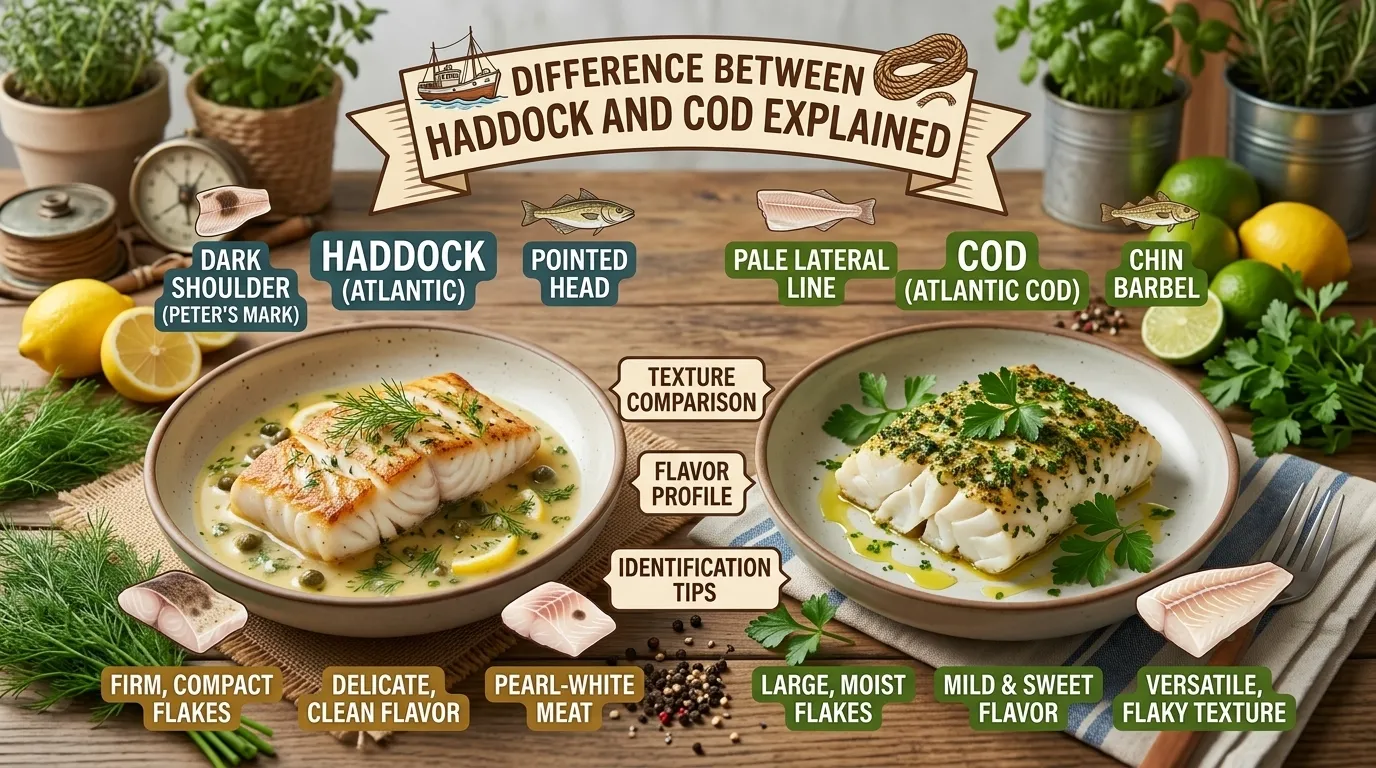
Haddock is a lean, slightly sweeter white fish with a finer texture, while cod is a milder, flaky white fish with a softer, more neutral taste.
KEY DIFFERENCE OVERVIEW
The difference between haddock and cod is mainly found in taste, texture, appearance, and culinary use. Both are popular cold-water fish used in similar dishes like fish and chips, but they are not identical. Cod is softer and milder, making it more versatile, while haddock has a firmer texture and a slightly stronger flavor.
IMPORTANCE OF UNDERSTANDING THE DIFFERENCE
Understanding the difference between haddock and cod helps you:
- Choose the right fish for cooking recipes
- Understand restaurant menu options
- Improve seafood flavor pairing
- Make healthier dietary choices
For example, cod is often preferred for frying, while haddock is popular in smoked fish dishes.
PRONUNCIATION SECTION
Haddock
- US: /ˈhæd.ək/
- UK: /ˈhæd.ək/
- Phonetic: HAD-uk
Cod
- US: /kɒd/
- UK: /kɒd/
- Phonetic: KOD
Key Differences Between Haddock and Cod
1. Taste Difference
Cod has a mild, neutral flavor, while haddock has a slightly sweeter and stronger taste.
Example: Cod works well in light seasoning dishes.
2. Texture Difference
Cod is softer and flakes easily, while haddock is firmer and slightly drier.
Example: Haddock holds shape better in grilling.
3. Appearance Difference
Cod is usually lighter and more uniform in color, while haddock often has a darker “thumbprint” mark near the gills.
Example: Haddock has a distinctive black shoulder mark.
4. Culinary Use Difference
Cod is more versatile in cooking, while haddock is preferred for specific traditional dishes.
Example: Cod in burgers vs haddock in smoked recipes.
5. Flavor Absorption Difference
Cod absorbs seasoning easily, while haddock retains its own flavor more strongly.
Example: Cod adapts to spicy sauces better.
6. Cooking Method Difference
Cod is ideal for frying, baking, and grilling. Haddock is often smoked, baked, or used in chowders.
Example: Fish and chips commonly use cod.
7. Price Difference
Cod is often more expensive due to demand and availability. Haddock is usually slightly cheaper.
Example: Restaurant cod dishes cost more than haddock.
8. Habitat Difference
Both live in cold North Atlantic waters, but cod is found in slightly deeper and broader ranges.
Example: Cod is more widely distributed in fisheries.
9. Nutritional Difference
Both are high in protein and low in fat, but cod is slightly leaner.
Example: Cod preferred in low-fat diets.
10. Availability Difference
Cod is more widely available globally, while haddock is more region-specific.
Example: Cod is common in international markets.
INDIVIDUAL ANALYSIS
Nature of Haddock
Haddock is a cold-water white fish known for its firm texture and slightly sweet flavor. It is commonly used in smoked dishes and traditional European cuisine, especially in the UK.
Nature of Cod
Cod is a widely consumed white fish known for its mild taste and soft, flaky texture. It is extremely versatile and used in many global recipes, especially fried and baked dishes.
CONFUSION REASON
The difference between haddock and cod is confusing because:
- Both are white, flaky fish
- Both are used in fish and chips
- Both come from similar cold waters
- Both are sold interchangeably in markets
However, their texture, taste, and cooking behavior are noticeably different.
COMPARISON TABLE
| Feature | Haddock | Cod |
|---|---|---|
| Taste | Slightly sweet, stronger | Mild, neutral |
| Texture | Firm | Soft & flaky |
| Appearance | Dark shoulder mark | Uniform white |
| Cooking use | Smoking, chowder | Frying, baking |
| Flavor | Distinct | Subtle |
| Similarity | Both white fish | Both white fish |
| Key Difference | Stronger taste | Milder taste |
WHICH IS BETTER & WHEN?
Haddock is better when:
- You want stronger fish flavor
- You are making smoked dishes
- You prefer firmer texture
Cod is better when:
- You want mild taste
- You are frying or baking
- You want versatile seafood
Neither is universally better—it depends on cooking style and preference.
LANGUAGE & LITERARY USE
Metaphors
- Cod = “blank canvas of the sea”
- Haddock = “character-rich ocean flavor”
Connotative Meaning
- Cod → neutral, adaptable, soft
- Haddock → distinct, bold, traditional
IDIOMS / PROVERBS
No direct idioms, but seafood saying:
- “Fresh fish needs little seasoning” → applies especially to haddock and cod
LITERATURE USE
- Common in British culinary literature
- Featured in seafood classification guides
- Used in nutrition and marine biology textbooks
MOVIE / CULTURE REFERENCES
- The Perfect Storm highlights North Atlantic fishing culture where cod is commonly harvested
- British food culture heavily features both cod and haddock in traditional fish and chips
FAQ SECTION
1. What is the main difference between haddock and cod?
Haddock has a stronger taste and firmer texture, while cod is milder and softer.
2. Which is better for fish and chips?
Cod is more commonly used for fish and chips.
3. Is haddock healthier than cod?
Both are healthy, but cod is slightly leaner.
4. Why is haddock more flavorful?
Because it has a naturally stronger fish taste.
5. Can you substitute cod for haddock?
Yes, but the taste and texture will change slightly.
6. Which fish is more expensive?
Cod is usually more expensive.
7. Is haddock fishy in taste?
It has a stronger taste but is not overly fishy.
8. Which is more popular worldwide?
Cod is more widely consumed globally.
REAL-WORLD IMPORTANCE
The difference between haddock and cod is important for chefs, nutritionists, and seafood lovers. It helps in selecting the right fish for recipes, balancing flavor profiles, and understanding seafood markets. Choosing correctly improves both taste and cooking results.
FINAL SUMMARY
The difference between haddock and cod is mainly in taste, texture, and culinary use. Haddock is firmer with a stronger flavor, while cod is milder, softer, and more versatile. Both are popular white fish but serve different cooking purposes.
CONCLUSION
Understanding the difference between haddock and cod helps you make better food choices and improve cooking results. Although both are white fish from cold waters and often used in similar dishes, their taste and texture are not the same. Cod is mild and soft, making it highly versatile for frying and baking. Haddock has a firmer texture and stronger flavor, making it ideal for smoked or traditional recipes.
Knowing this difference helps chefs, home cooks, and seafood lovers choose the right fish for the right dish. It also improves appreciation of seafood cuisine and ensures better flavor balance in meals. Once you recognize their unique qualities, selecting between haddock and cod becomes simple and more intentional.

I’m Ethan Caldwell, a language enthusiast who enjoys simplifying confusing English word pairs for everyday readers. At Hubdifference.com, I write clear and practical comparisons that help users choose the right word with confidence. My goal is to remove confusion and make English learning simple, useful, and accessible. I believe the right words create better communication.