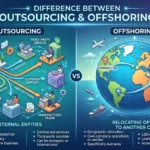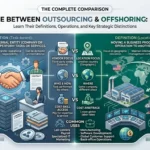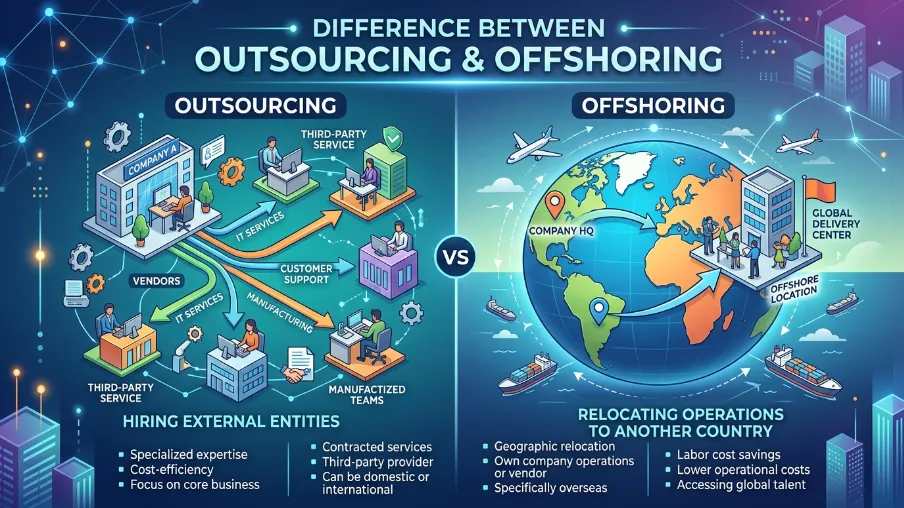
Outsourcing means hiring another company to do work, while offshoring means moving work to another country.
Emma owned a small online clothing store in United States. She hired a customer support company in Philippines and proudly told her friend she had started “offshoring.” Her friend smiled and explained that she was actually outsourcing. Emma felt confused because both ideas sounded similar.
The difference between outsourcing and offshoring confuses many students and business beginners. Both involve moving work away from a company’s main office, but they are not the same. Outsourcing means giving work to another company. Offshoring means moving business operations to another country. Learning the difference between outsourcing and offshoring helps people understand global business, job markets, and company strategies. Once you know the basics, these business terms become much easier to understand.
Key Difference
The main difference is simple. Outsourcing focuses on who does the work, while offshoring focuses on where the work happens. A company may outsource locally or offshore work using its own overseas office.
Why Is This Difference Important to Know?
Understanding the difference between outsourcing and offshoring helps students, workers, and business owners make smarter business decisions. Companies use these methods to lower costs, improve services, and reach global markets. If people mix up the terms, they may misunderstand contracts, jobs, or business plans. Clear knowledge also improves communication during meetings, interviews, and business discussions.
Linking Hook
Now that you know the basic idea, let’s explore the deeper differences. The next ten points explain how outsourcing and offshoring work in real companies and daily business life.
10 Points of Difference
1. Basic Definition and Meaning
Outsourcing means hiring another company to complete a task or service. Offshoring means moving business work to another country. Outsourcing may happen inside the same country, but offshoring always involves a foreign location.
Example 1: Slack outsourced customer support services.
Example 2: Apple offshore manufacturing work to China.
2. Origin / Source / Main Components
Outsourcing became popular when companies wanted expert help without hiring full-time workers. Offshoring grew as businesses searched for cheaper labor and global expansion. Outsourcing depends on third-party companies. Offshoring depends on international business operations.
Example 1: IBM outsourced IT projects to outside agencies.
Example 2: Nike offshore shoe production to Vietnam.
3. Process — How It Is Done
In outsourcing, a company signs an agreement with another business. That outside company handles the work. In offshoring, the company moves part of its operations overseas and often manages the team directly.
Example 1: Zoom outsourced customer support tasks.
Example 2: Microsoft opened offices in Ireland for offshore operations.
4. Time Involved / Duration
Outsourcing projects may last a few weeks or several years depending on contracts. Offshoring is usually long-term because companies invest in buildings, workers, and systems overseas.
Example 1: Spotify outsourced short-term marketing projects.
Example 2: Google built long-term engineering teams in India.
5. Output Quality or Work Style
Outsourcing quality depends on the outside company’s skill and experience. Offshoring quality depends on communication, training, and overseas management. Both methods can produce excellent results when managed carefully.
Example 1: Amazon outsourced delivery support services.
Example 2: Intel offshore chip testing operations abroad.
6. Primary Use Cases
Companies outsource services like payroll, customer support, and website design. They offshore manufacturing, software development, and technical operations to reduce labor costs and expand globally.
Example 1: Airbnb outsourced moderation support.
Example 2: Dell offshore technical support teams overseas.
7. Effect or Impact
Outsourcing can improve speed and reduce workload quickly. Offshoring can lower business costs and increase global reach. However, both may create communication or cultural challenges.
Example 1: PayPal outsourced fraud-checking services.
Example 2: Samsung offshore manufacturing across Asia.
8. Degree of Specificity or Precision
Outsourcing often focuses on one service or small task. Offshoring may involve full departments, factories, or entire business units. Offshoring usually affects larger parts of a company.
Example 1: Shopify outsourced design projects.
Example 2: Toyota offshore vehicle production globally.
9. Can They Replace Each Other?
Outsourcing and offshoring sometimes work together, but they are not identical. A company may outsource work inside its own country. Another company may offshore work while keeping full ownership of the overseas team.
Example 1: Uber outsourced support operations.
Example 2: HP offshore manufacturing units abroad.
10. Long-Term Results / Lasting Impact
Outsourcing often creates flexibility and lowers short-term costs. Offshoring may help businesses build global networks and long-term international growth. Both methods can increase profits if managed properly.
Example 1: Cisco outsourced some service operations.
Example 2: Oracle offshore engineering teams internationally.
Nature and Behaviour
Outsourcing feels flexible and temporary. Companies use it when they need expert help quickly or want to reduce workload without hiring new staff.
Offshoring feels larger and more permanent. Businesses move operations abroad to save costs, grow internationally, and build long-term overseas teams.
Why Do People Confuse Them?
People confuse outsourcing and offshoring because both move work away from the main office. Both may involve overseas workers and lower business costs. News reports often use the terms incorrectly. A manager may say “offshoring” when the company only hired an outside service provider.
Comparison Table
| Feature | Outsourcing | Offshoring |
|---|---|---|
| Definition | Hiring another company | Moving work overseas |
| Origin | Third-party support | Global expansion |
| Process | Contract-based | Location-based |
| Duration | Flexible | Long-term |
| Output | Depends on vendor | Depends on overseas management |
| Main Use | Expert services | Lower costs |
| Impact | Faster operations | Global growth |
| Interchangeable? | No | No |
| Long-term Result | Flexibility | International presence |
| Similarity | Both move work away | Both save costs |
| Key Difference | Outside company | Different country |
Which Is Better and When?
Outsourcing is better when companies need fast expert help without hiring new employees. A startup may outsource graphic design to save time and money.
Offshoring is better when businesses want long-term savings and international growth. Large companies like IBM offshore operations to build global teams and reduce production expenses.
Quick Decision Guide
Choose Outsourcing if:
☑ You need expert help quickly
☑ Your company lacks certain skills
☑ You want short-term support
☑ You prefer flexible contracts
Choose Offshoring if:
☑ You want lower labor costs
☑ Your business plans global growth
☑ You need overseas operations
☑ You want long-term expansion
Metaphors and Similes
Outsourcing is like hiring a skilled neighbor to repair your house. Offshoring is like building another house in a different country. Both move work away from home, but they solve problems differently.
Connotative Meaning
Outsourcing often sounds efficient and flexible. Example 1: A startup outsourced customer service successfully. It may sound negative when local jobs disappear. Example 2: Factory workers lost positions after outsourcing.
Offshoring often sounds global and cost-saving. Example 1: A company expanded overseas successfully. It may sound negative when customers fear lower service quality. Example 2: Buyers complained about offshore support delays.
Idioms and Proverbs
“Time is money” fits outsourcing because companies save time using experts. Example 1: The business outsourced payroll to focus on sales.
“The world is your oyster” connects with offshoring. Example 2: The company expanded overseas confidently.
[Coined expression] “Move farther, grow faster.” Example 3: The CEO used it during an offshoring presentation.
FAQ Section
Q1: What is the main difference between outsourcing and offshoring?
Outsourcing means hiring another company to perform tasks. Offshoring means moving work to another country. Outsourcing focuses on outside providers, while offshoring focuses on overseas locations.
Q2: Can outsourcing be used instead of offshoring?
Sometimes, but not always. Outsourcing may happen locally without moving work abroad. Offshoring may involve the company’s own overseas employees instead of outside contractors.
Q3: Which is better — outsourcing or offshoring?
It depends on business goals. Outsourcing works well for quick support and specialized services. Offshoring is better for long-term savings and global business expansion.
Q4: How long does outsourcing or offshoring last?
Outsourcing contracts can last weeks, months, or years. Offshoring usually lasts longer because companies invest heavily in overseas teams, offices, and infrastructure.
Q5: Why do people mix up outsourcing and offshoring?
Both methods move work away from the company’s main office. Both can reduce costs and involve overseas workers. Media and business discussions often blur the difference.
Real-World Importance
Knowing the difference between outsourcing and offshoring helps students, workers, and business owners understand global business decisions. It improves communication during meetings, interviews, and business planning. It also helps people better understand international trade and job markets.
Conclusion
The difference between outsourcing and offshoring becomes easy once you focus on the main idea. Outsourcing means another company handles the work. Offshoring means work moves to another country. Outsourcing offers flexibility and expert support, while offshoring supports long-term savings and global growth. Many businesses use both methods together to improve efficiency and reduce costs. Understanding these concepts helps you follow business news, company strategies, and workplace discussions more confidently. Keep learning these simple business terms, and global business ideas will soon feel much easier to understand.

I’m Sophia Turner, a content writer who loves making English simple and easy to understand. At Hubdifference.com, I write clear comparisons of commonly confused words, spelling variations, and everyday language differences. I focus on practical examples so readers can quickly learn and use the right words. My aim is to help learners write with clarity, confidence, and accuracy.