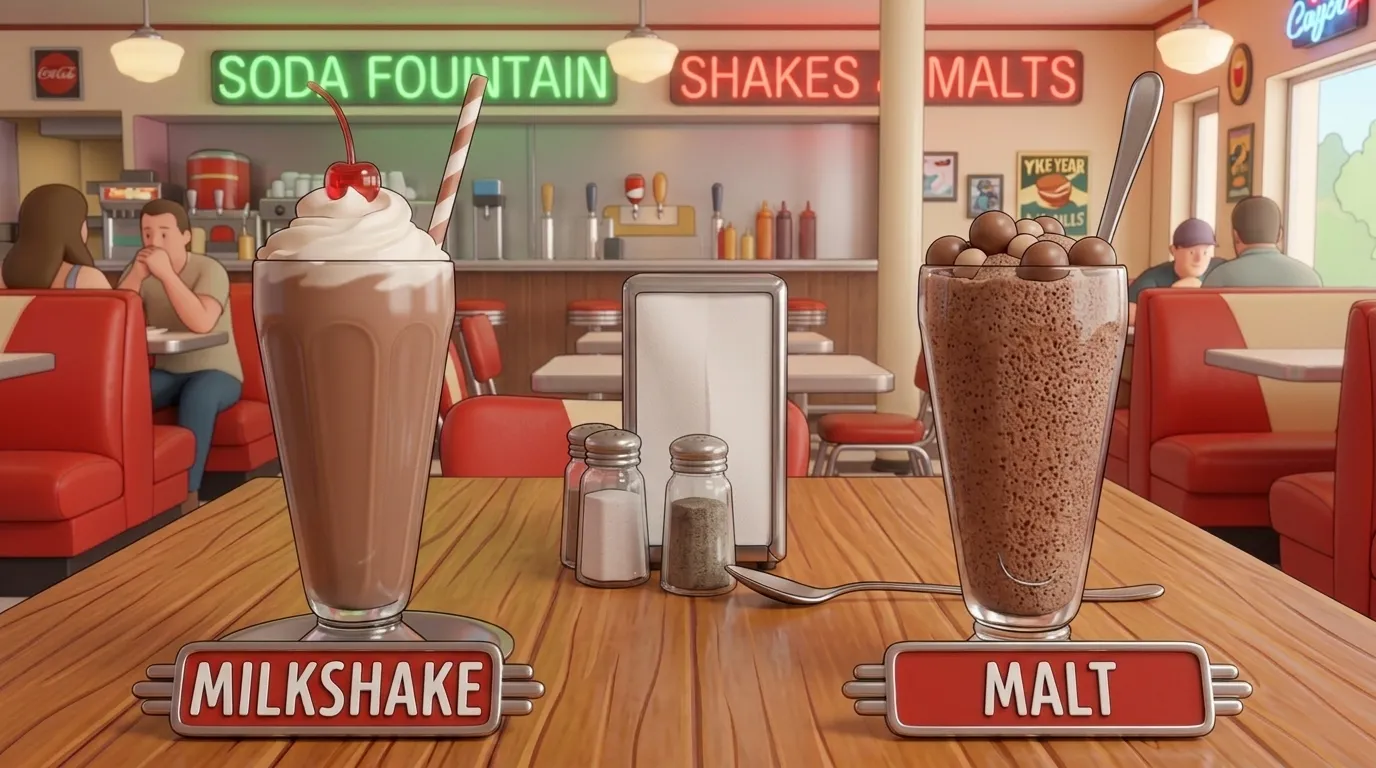
A malt is just a milkshake with malted milk powder blended in, which gives it a nutty, toasty flavor that a regular milkshake does not have.
Most people think a malt is just a fancy word for milkshake. It is not, and the mix up causes more kitchen mistakes than you would think.
Last summer, a teenager named Jordan worked his first shift at a diner counter. A customer ordered a chocolate malt, and Jordan handed over a plain chocolate milkshake instead. The customer sent it back, annoyed, because the drink was missing that signature malty taste she loved. Jordan had no idea the two drinks were even different.
So what really separates a milkshake from a malt, and why does one small ingredient change everything? Once you understand the difference between milkshake and malt, you will never make Jordan’s mistake again.
Both drinks start the same way. A milkshake is a blend of ice cream, milk, and flavoring. A malt is that same blend with one extra ingredient added: malted milk powder. That single scoop of powder is the entire difference between milkshake and malt, and it changes the taste, texture, and even the history behind the drink.
Key Difference
The core difference between milkshake and malt comes down to one ingredient. A milkshake is ice cream blended with milk and flavoring. A malt is that exact same drink with malted milk powder mixed in, which adds a toasty, nutty taste.
Keep reading, we break down all 10 differences in plain, simple terms below.
Why Is This Difference Important to Know?
Knowing the difference between milkshake and malt matters more than you think, especially if you work behind a counter, run a restaurant, or just want to order the right drink. Getting it wrong can mean a disappointed customer or a wasted trip back to the kitchen.
For home cooks, it also matters for grocery shopping. Malted milk powder is not something every kitchen has on hand, so knowing which drink calls for it saves you a last minute store run.
10 Points of Difference
1. Basic Definition and Meaning
A milkshake is a cold, blended drink made from ice cream, milk, and flavoring. A malt is a milkshake with malted milk powder stirred in. Sarah at her local diner always orders a vanilla milkshake, while her brother Tom always asks for a vanilla malt because he loves the extra flavor kick.
2. Origin or Main Components
Milkshakes trace back to the 1880s as a mixed drink with eggs and whiskey, later becoming the ice cream treat we know today. Malts appeared in the early 1900s after malted milk powder was invented for baby formula. A shop owner named Ivar Coulson is often credited with adding it to milkshakes in Chicago in 1922.
3. Process, How It Is Made
Both drinks start by blending ice cream with milk in a mixer. A malt adds one extra step: a spoonful of malted milk powder goes in before blending. Chef Maria at a downtown diner always adds the powder last so it blends smoothly without clumping.
4. Time Involved or Duration
Making either drink takes about the same amount of time, usually under two minutes. The malt takes a few extra seconds because the powder needs to dissolve fully. Barista trainee Alex learned this the hard way when his first malt came out gritty from rushing the blend.
5. Flavor, Feel, or Output Quality
A milkshake tastes purely of its main flavor, like chocolate or strawberry. A malt has that same flavor plus a nutty, almost toasted taste from the malt powder. Diner regular Mrs. Chen says her malt tastes like it has a hint of caramel and grain bread.
6. Primary Use Cases
Milkshakes are the go to choice for kids and anyone who wants a simple, sweet treat. Malts are often chosen by adults or nostalgic diner fans who grew up with old school soda fountains. A restaurant called Pete’s Malt Shop built its entire menu around the malt because of this loyal fan base.
7. Effect or Impact
A milkshake gives a straightforward sugar and cream rush. A malt adds a bit more protein and B vitamins from the malted milk powder, giving a slightly different feeling afterward. Nutritionist Dana often points out that a malt can feel a little heavier in the stomach than a plain shake.
8. Degree of Specificity or Precision
Milkshake is a broad term that covers dozens of flavor combinations. Malt is a specific type of milkshake, always defined by the added malt powder. Menu writer Ben always double checks that his restaurant labels malts correctly, since calling a plain shake a malt would be misleading.
9. Can They Replace Each Other?
You can turn any milkshake into a malt just by adding malted milk powder. You cannot turn a malt into a plain milkshake without leaving that ingredient out from the start. Home baker Priya keeps a jar of malt powder in her pantry so she can switch between both drinks anytime.
10. Long Term Results or Lasting Impact
Milkshakes remain the more popular, universally loved drink across the world. Malts have stayed a niche favorite, mostly tied to classic American diners and soda fountains. Food historian Greg notes that malt shops nearly vanished in the 1970s but have seen a small comeback in retro diners today.
Nature and Behaviour
A milkshake feels light, sweet, and familiar. It behaves like a blank canvas, ready to take on any flavor you add, from cookies to fresh fruit.
A malt feels richer and a bit more complex. It behaves like a milkshake with a personality of its own, always carrying that signature toasty note no matter what flavor you mix in.
Why Do People Confuse Them?
People confuse a milkshake and a malt for a few clear reasons. Both drinks look the same in a cup, both are served with a straw, and many menus list them side by side without much explanation. Malt shops themselves are often just called milkshake shops today.
A common mistake happens when a customer orders a malt at a shop that only serves plain milkshakes, and the server has no idea what malt powder even is.
Comparison Table
| Feature | Milkshake | Malt |
| Definition | Ice cream blended with milk and flavoring | Milkshake with malted milk powder added |
| Origin | 1880s mixed drink, later an ice cream treat | Early 1900s, tied to malted milk powder |
| Process | Blend ice cream and milk | Blend ice cream, milk, and malt powder |
| Duration | About one minute | About one to two minutes |
| Output | Smooth, purely flavored drink | Smooth drink with nutty, toasty taste |
| Main Use | Everyday sweet treat | Nostalgic diner favorite |
| Impact | Simple sugar and cream rush | Slightly heavier, with added protein |
| Interchangeable? | Can become a malt by adding powder | Cannot become a plain shake once made |
| Long Term Result | Widely popular worldwide | Niche, tied to classic diners |
| Similarity | Same base ingredients | Same base ingredients |
| Key Difference | No malted milk powder | Contains malted milk powder |
📌 Save this for later, bookmark this page or share it with someone who always mixes up milkshake and malt.
Which Is Better and When?
A milkshake is better when you want a simple, classic sweet treat that pairs with any flavor, like a birthday party or a quick dessert after dinner. A malt is better when you want a richer, more old fashioned taste, like recreating a 1950s diner experience at home.
Quick Decision Guide
Choose Milkshake if: ☑ You want a simple, sweet, classic drink ☑ You are serving kids who prefer familiar flavors ☑ You do not have malted milk powder on hand ☑ You want a lighter, purely fruity or chocolate taste
Choose Malt if: ☑ You want a nutty, toasty flavor twist ☑ You love old school diner style drinks ☑ You already have malted milk powder in your pantry ☑ You want something a bit richer and heartier
Still unsure? Drop your question in the comments, we answer every single one.
Metaphors and Similes
A milkshake is like a blank page, ready for any flavor story you want to tell. A malt is like an old vinyl record, carrying a warm, nostalgic sound no matter what song plays. Choosing between them is like choosing between a new book and a favorite worn one.
Connotative Meaning
Milkshake carries a positive, playful connotation, often linked to childhood and fun. It can feel plain to some, and neutrally, it simply means a cold blended drink. Think of a kid’s birthday party milkshake bar.
Malt carries a positive, nostalgic connotation tied to classic diners. Some find it negative if they dislike the nutty taste, calling it too heavy. Neutrally, it just means a milkshake with malt powder. Think of a 1950s soda fountain scene.
Idioms and Proverbs
People say “shake things up” when they want change, a nod to the mixing behind a milkshake. Diner regulars sometimes say someone is “old malt shop cool” [coined expression] to describe a classic, nostalgic style. You might also hear “smooth as a milkshake” to describe something easygoing.
FAQ Section
Q1: What is the main difference between milkshake and malt?
A malt has malted milk powder added, giving it a nutty, toasty taste. A plain milkshake does not have this ingredient, so it tastes simpler and lighter.
Q2: Can milkshake be used instead of malt?
Yes, but it will taste different. A plain milkshake lacks the nutty flavor that malted milk powder gives a true malt.
Q3: Which is better, milkshake or malt?
It depends on your taste. Milkshakes suit simple, classic cravings, while malts suit those wanting a richer, more nostalgic flavor.
Q4: How long does a milkshake or malt last?
Both are best enjoyed fresh, within about fifteen minutes, before the ice cream melts and the texture turns watery.
Q5: Why do people mix up milkshake and malt?
They look identical in a cup and are often served at the same shops. Many people have simply never tasted malted milk powder to notice the difference.
Related Reading
You might also like: → The History of the American Soda Fountain, sodafountainhistory → How to Make the Perfect Diner Style Milkshake at Home, dinershakes
Real World Importance
Knowing the difference between milkshake and malt helps at restaurants, family gatherings, and even grocery shopping. It saves confusion when ordering at a diner, helps you stock the right ingredients at home, and lets you recreate classic recipes accurately for nostalgic family nights.
Conclusion
At the end of the day, the difference between milkshake and malt comes down to one simple ingredient: malted milk powder. A milkshake stays light and classic, while a malt brings a richer, nuttier twist that has charmed diner lovers for over a century. Both share the same creamy base, but that one addition changes the entire experience.
Now that you know the difference, you will never mix them up again. Next time you are at the counter, you can order exactly what you want with total confidence.
See More: Population vs Sample: 10 Key Differences You Must Know

I’m Ayesha Sadiqah, and I’m passionate about answering one simple question: “What’s the difference?” Through clear comparison guides, I help readers understand commonly confused words, products, concepts, and everyday topics. My goal is to make complex ideas easy to understand with accurate, practical, and reader-friendly explanations.