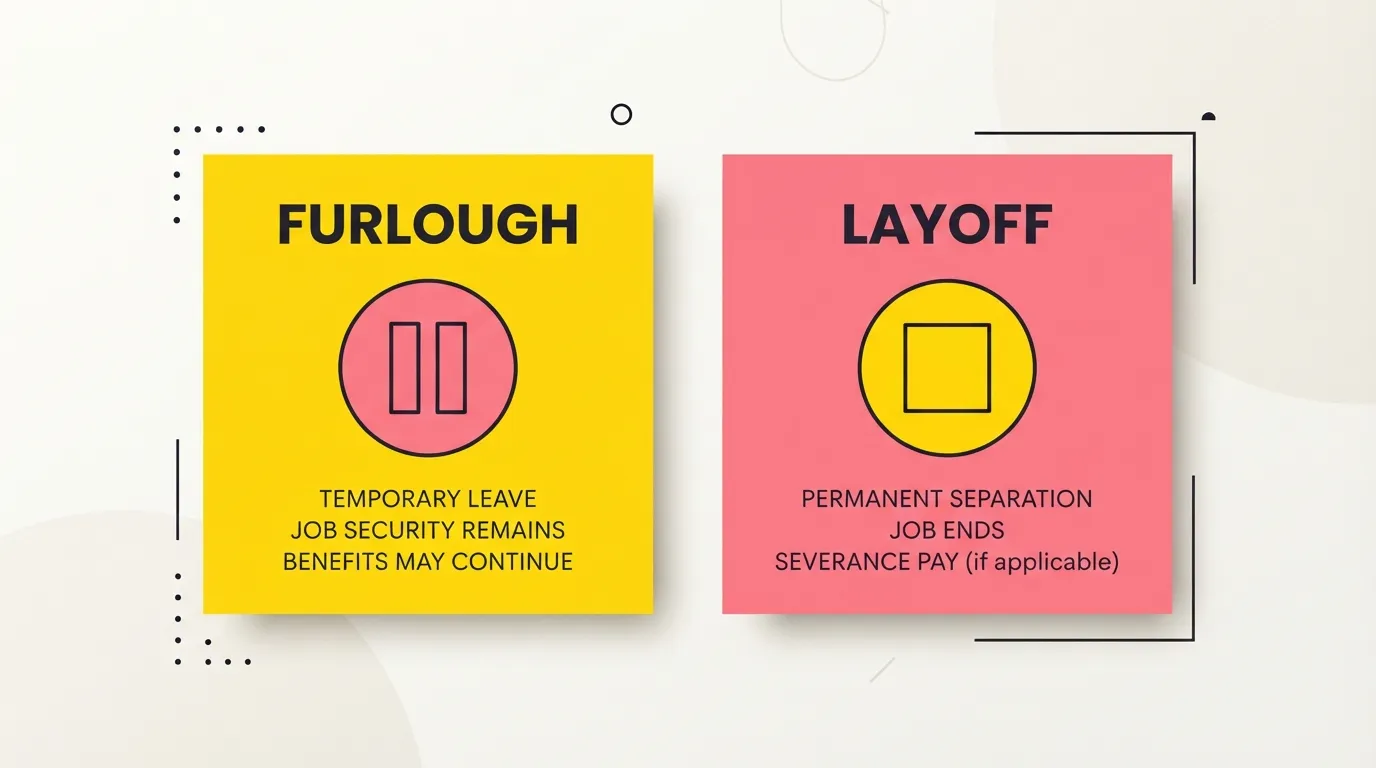
A furlough is a temporary, unpaid break from your job where you technically remain employed, while a layoff is a permanent job separation where your position is eliminated entirely.
Most People Use These Words Like Synonyms. They Are Not.
Most people use furlough and layoff like they mean the same thing. They do not, and mixing them up can cost you unemployment benefits, health coverage, or even your job search timeline.
Maria found this out the hard way. Her manager told her she was “furloughed,” so she assumed her job was simply gone and stopped checking her work email entirely. Weeks later, she missed the call telling her to return, and lost her spot to someone who stayed reachable.
So what actually separates these two words, and why does it matter so much for your paycheck and your plans?
A furlough keeps you employed, just without pay or hours for a set period. A layoff ends your employment completely, often with no promise of return. Understanding the difference between furlough and layoff can change how you handle benefits, job hunting, and even your next conversation with HR.
Key Difference
A furlough is temporary. You stay on the company’s books, often keeping benefits, and you’re expected back once conditions improve. A layoff is permanent. Your position is eliminated, and you’re free to accept other work immediately. Keep reading, we break down all 10 differences in plain, simple terms below.
Why Is This Difference Important to Know?
Knowing the difference between furlough and layoff affects your unemployment eligibility, your health insurance, and your financial planning. Furloughed workers sometimes cannot collect full unemployment if they’re technically still employed, depending on the state.
Laid off workers usually qualify for unemployment right away, plus they can search for new jobs without worrying about violating their old employer’s rules. Both beginners and experienced workers need this clarity before making any big financial decisions.
Before We Break This Down Further
Both terms show up constantly during economic downturns, company restructuring, and seasonal slowdowns. If you also want to understand your rights during workplace changes, check out our guide on severance pay and what you’re actually owed.
10 Key Differences Between Furlough and Layoff
1. Basic Definition and Meaning
A furlough is a temporary, unpaid leave where your job still exists. A layoff is a permanent end to your employment, with your position eliminated. When Delta furloughed pilots during a slow travel season, those pilots kept their seniority. When Sears laid off store employees during closures, those jobs were gone for good.
2. Origin and Main Components
Furloughs often come from budget shortfalls, government shutdowns, or temporary slowdowns where leadership expects things to improve. Layoffs often come from permanent restructuring, company closures, or automation replacing roles. A federal furlough during a government shutdown affects thousands of workers at once. A factory layoff after a plant closes affects workers with no return date at all.
3. Process: How It Is Made or Done
A furlough usually involves a formal notice stating the leave is temporary, with an expected or possible return date. A layoff usually involves a final termination notice, sometimes with severance pay attached. Boeing furloughed engineers during a production pause, with return dates communicated in advance. Amazon laid off warehouse staff during a facility closure, with no return planned at all.
4. Time Involved and Duration
Furloughs typically last days to a few months, though some stretch longer depending on the situation. Layoffs are indefinite by nature, since the job itself no longer exists. A retail furlough during a slow holiday season might last just six weeks. A manufacturing layoff after a permanent plant shutdown has no end date whatsoever.
5. Financial Impact and Output Quality
Furloughed employees often keep health benefits, though they usually lose their paycheck during the leave. Laid off employees typically lose both pay and benefits immediately, unless they pay for COBRA coverage themselves. A furloughed teacher might keep her school district health plan active. A laid off retail worker often loses coverage the same month their job ends.
6. Primary Use Cases
Furloughs work well for temporary budget gaps, seasonal slowdowns, or short term crises where leadership expects recovery. Layoffs work as a permanent solution when a company needs to cut costs long term or eliminate roles entirely. A restaurant might furlough kitchen staff during a slow winter month. A tech company might lay off an entire department after cancelling a product line.
7. Effect or Impact on Workers
A furlough creates uncertainty but preserves a connection to the employer, including possible benefits and seniority. A layoff creates a clean break, forcing workers to search for entirely new employment right away. Furloughed hotel staff often return to the exact same job once travel picks back up. Laid off hotel staff typically need to apply somewhere new, since their old position no longer exists.
8. Degree of Specificity or Precision
Furlough specifically implies a temporary, reversible situation with an expected return. Layoff specifically implies a permanent, final separation from the company. Saying “I was furloughed” tells people you expect to return soon. Saying “I was laid off” tells people you’re actively job hunting with no employer waiting for you.
9. Can They Replace Each Other?
Not accurately, since furlough implies temporary status and layoff implies permanent separation. Companies sometimes convert a furlough into a layoff if conditions don’t improve as expected. Many airlines furloughed staff early in a downturn, then converted those furloughs into permanent layoffs months later. That shift shows how one status can legally transform into the other over time.
10. Long Term Results and Lasting Impact
A furlough, once resolved, usually means returning to your same role, same seniority, and same benefits. A layoff means starting over completely, often rebuilding seniority, benefits, and income from scratch somewhere new. Furloughed government workers typically return to their exact desks once funding resumes. Laid off employees often need months to rebuild their career momentum at a brand new company.
Nature and Behaviour
A furlough feels like a pause button, temporary, uncertain, but hopeful. It’s the awkward waiting room of employment, where you’re neither fully working nor fully free to move on.
A layoff feels like a closed door, final and forcing forward motion. It’s the push that sends workers job hunting immediately, without the option of simply waiting things out.
Why Do People Confuse Them?
Both situations feel like sudden, unwanted disruptions to income, which makes the emotional experience feel identical even when the legal status differs completely. Companies also sometimes use vague language during announcements, avoiding the word “layoff” to soften the blow.
Maria’s confusion happened for exactly this reason. Her manager used gentler language, “furloughed,” without clearly explaining whether her job still legally existed or not.
Comparison Table: Furlough vs Layoff
| Feature | Furlough | Layoff |
| Definition | Temporary, unpaid leave with continued employment | Permanent termination of employment |
| Origin | Budget shortfalls, shutdowns, seasonal slowdowns | Restructuring, closures, permanent cost cuts |
| Process | Formal notice with expected or possible return date | Final termination notice, sometimes with severance |
| Duration | Days to a few months, sometimes longer | Indefinite, since the position is eliminated |
| Output | Often keeps benefits, loses paycheck temporarily | Usually loses pay and benefits immediately |
| Main Use | Temporary budget gaps and seasonal slowdowns | Permanent cost cutting and role elimination |
| Impact | Preserves connection to employer and seniority | Creates a clean break, forces new job search |
| Interchangeable | No, but can convert into a layoff over time | No, but can result from an extended furlough |
| Long Term Result | Return to same role, benefits, and seniority | Rebuilding career, income, and benefits elsewhere |
| Similarity | Both involve sudden loss of income and stress | Both involve sudden loss of income and stress |
| Key Difference | Temporary status with expected return | Permanent status with no return |
📌 Save this for later, bookmark this page or share it with someone who always mixes up furlough and layoff.
Which Is Better and When?
A furlough works better for both sides when the slowdown is genuinely temporary, like a seasonal dip or short term budget freeze, since it keeps trained staff ready to return. A layoff works better when a company needs permanent cost cuts or is eliminating a role entirely, since it gives workers the freedom to search for new jobs immediately instead of waiting indefinitely.
Quick Decision Guide
Choose to treat your situation as a Furlough if: ☑ Your employer gave you an expected return date ☑ You still have access to benefits or company systems ☑ Leadership described the situation as temporary ☑ You’re legally restricted from certain other job offers
Choose to treat your situation as a Layoff if: ☑ You received a final termination notice ☑ Your benefits ended or require COBRA payment ☑ No return date or timeline was mentioned ☑ You’re free to accept any new job immediately
Still unsure? Drop your question in the comments, we answer every single one.
Metaphors and Similes
A furlough is a pause button on a remote control, everything freezes but stays ready to resume. A layoff is the off switch, final and requiring a fresh start. Comparing them is like comparing a paused movie to one that’s ended completely, both stop the action, but only one lets you press play again.
Connotative Meaning
Furlough can feel hopeful in a positive sense, since it suggests the company still values you enough to want you back. It can feel frustrating in a negative sense if the wait drags on with no clear end. Neutrally, it simply names a temporary, unpaid employment pause.
Layoff can feel liberating in a positive sense, opening the door to new opportunities elsewhere. It can feel devastating in a negative sense, especially without warning or severance. Neutrally, it simply names a permanent end to a specific job role.
Idioms and Proverbs
People sometimes say a furloughed worker is “on the bench,” waiting for the coach to call them back into the game. Others describe a laid off worker as having been “let go,” a gentler phrase for a hard permanent ending. And when a furlough drags on too long, some coin the phrase “furlough fatigue” [coined expression], meaning the exhausting uncertainty of waiting for a return date that keeps slipping.
Frequently Asked Questions
Q1: What is the main difference between furlough and layoff?
A: A furlough is temporary, with an expected return and continued employment status. A layoff is permanent, ending your position completely with no guaranteed return to that same job.
Q2: Can a furlough be used instead of a layoff?
A: Sometimes, when the slowdown is genuinely short term. But if conditions don’t improve, many employers convert a furlough into a permanent layoff after weeks or months of waiting.
Q3: Which is better, furlough or layoff?
A: Neither is universally better. A furlough suits temporary slowdowns with an expected recovery, while a layoff suits permanent cuts, giving workers freedom to search for new jobs right away.
Q4: How long does a furlough or layoff last?
A: Furloughs typically last days to a few months, depending on the situation. Layoffs are indefinite by nature, since the position itself has been permanently eliminated from the company.
Q5: Why do people mix up furlough and layoff?
A: Both feel like sudden income loss, and companies sometimes use softer language like “furlough” to avoid saying layoff, which blurs the legal and financial distinction for affected workers.
Real World Importance
Knowing the difference between furlough and layoff helps you plan your finances, apply for the right benefits, and decide whether to job hunt immediately or wait it out. It matters most during economic downturns, government shutdowns, and seasonal business slowdowns, when this exact confusion affects millions of workers at once.
Final Thoughts
The difference between furlough and layoff comes down to permanence. A furlough is a temporary, unpaid pause with an expected return, while a layoff is a permanent end to your specific job. Both disrupt your income, but they demand completely different responses from you.
Now that you know the difference, you’ll never mix them up again. You can walk into your next HR conversation asking the right questions and making the right financial moves.
See More: Hibachi vs Teriyaki: The Real Difference Explained

I’m Ayesha Sadiqah, and I’m passionate about answering one simple question: “What’s the difference?” Through clear comparison guides, I help readers understand commonly confused words, products, concepts, and everyday topics. My goal is to make complex ideas easy to understand with accurate, practical, and reader-friendly explanations.