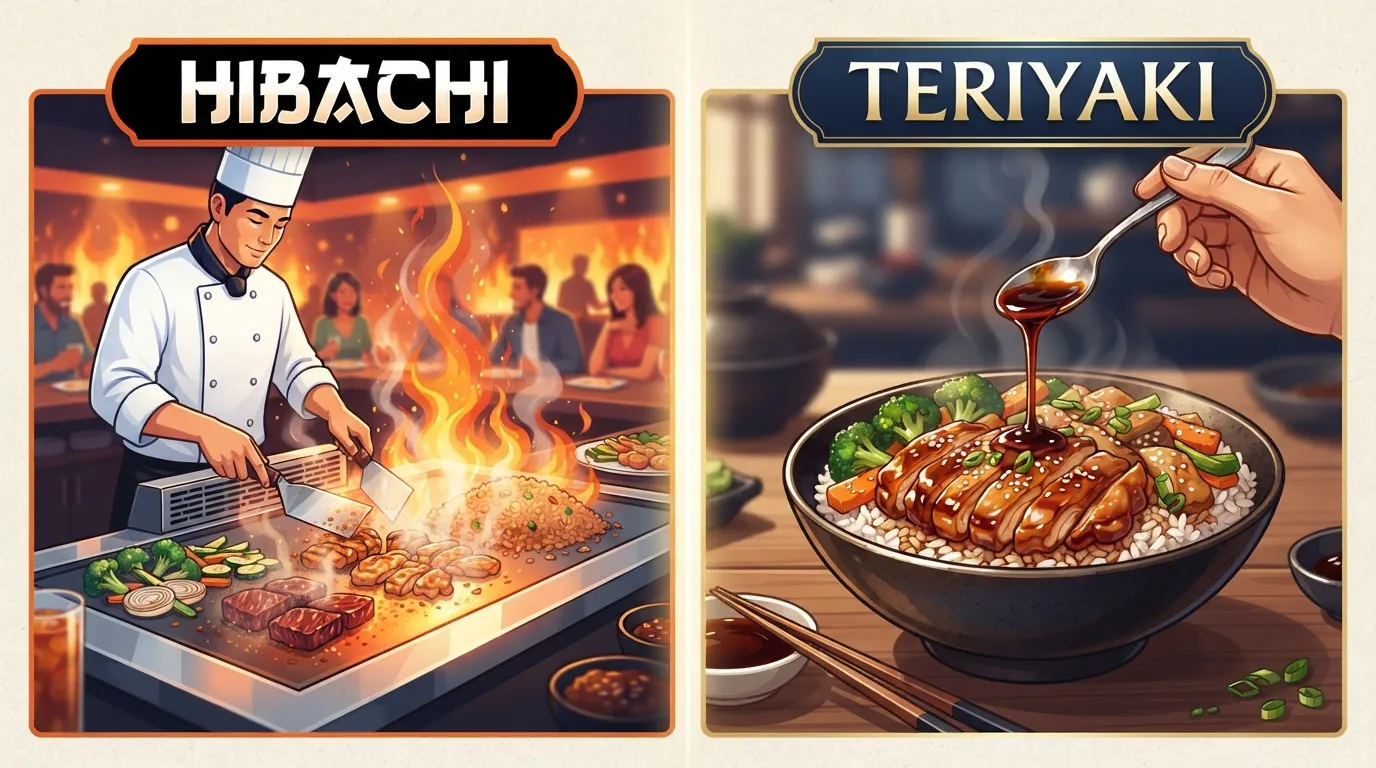
Hibachi is a grilling method that uses a hot flat top or open grill, while teriyaki is a cooking technique built around a sweet soy sauce glaze, so one describes how food is cooked and the other describes how it is flavored.
Most People Use These Words Like Synonyms. They Are Not.
Order “hibachi chicken” at one restaurant and “teriyaki chicken” at another, and you might get two totally different dishes. That mix up costs people the meal they actually wanted more often than you’d think.
My friend Sarah learned this the hard way at a food court last summer. She asked for hibachi chicken expecting a sweet glazed dish, but got a plain grilled chicken with no sauce at all. She felt confused, a little annoyed, and honestly surprised that two “Japanese” sounding words could mean such different things.
So what is actually going on here? Why does the difference between hibachi and teriyaki trip up so many hungry people at the counter?
Hibachi refers to a grilling method, a hot flat surface or open grill used to cook food fast. Teriyaki refers to a flavor technique, a glaze made from soy sauce, mirin, and sugar. Keep reading, because once you understand the difference between hibachi and teriyaki, you will never order the wrong thing again.
Key Difference
Hibachi describes how food is cooked, on a scorching hot grill or flat top, often with dramatic tableside flair. Teriyaki describes how food is flavored, using a glossy, sweet soy based sauce. Keep reading, we break down all 10 differences in plain, simple terms below.
Why Is This Difference Important to Know?
Knowing the difference between hibachi and teriyaki saves you from ordering the wrong dish and helps you cook the right one at home too. If you are on a low sodium diet, teriyaki sauce might not fit, while a plain hibachi dish could work fine.
Home cooks benefit too. Understanding both terms means you can recreate restaurant style meals without guessing what ingredients or tools you actually need.
Before We Compare, Let’s Set the Table
Both words show up constantly on Japanese American menus, and both often get slapped onto chicken, steak, or shrimp. If you also want to understand Japanese cooking styles more broadly, check out our guide on teppanyaki versus hibachi grilling.
10 Key Differences Between Hibachi and Teriyaki
1. Basic Definition and Meaning
Hibachi is a cooking method using a hot metal surface, traditionally an open grill or brazier. Teriyaki is a flavoring method using a glaze of soy sauce, sugar, and mirin. A hibachi steakhouse cooks food on a flat iron grill in front of you. A teriyaki bowl at a food court features meat brushed with sticky sauce.
2. Origin and Main Components
Hibachi comes from a small Japanese charcoal heating device, later adapted into large teppan grills used in American restaurants. Teriyaki comes from Japanese words meaning “shine” and “grill,” referring to the glossy glaze. A hibachi grill in Texas often looks nothing like the original Japanese hibachi. A bottle of teriyaki sauce on a grocery shelf traces straight back to that original glazing idea.
3. Process: How It Is Made or Done
Hibachi cooking involves searing food quickly on extreme heat, often with oil, garlic, and butter added live. Teriyaki cooking involves marinating or basting food in sauce, then grilling, broiling, or pan searing it. A hibachi chef at Benihana might toss shrimp tails into his hat for fun. A home cook making teriyaki salmon simply brushes on sauce and broils it for ten minutes.
4. Time Involved and Duration
Hibachi cooking is fast, usually just a few minutes per ingredient on that blazing hot surface. Teriyaki cooking can take longer if marinating first, sometimes thirty minutes to overnight. A hibachi vegetable medley cooks in under five minutes flat. A teriyaki marinated flank steak often sits in the fridge for hours before it even touches heat.
5. Flavor, Feel, and Output Quality
Hibachi food tastes smoky, buttery, and savory, shaped mostly by the grill itself. Teriyaki food tastes sweet, salty, and sticky, shaped entirely by the sauce. A hibachi fried rice gets its flavor from soy sauce, butter, and char. A teriyaki chicken thigh gets its flavor from that glossy brown glaze coating every bite.
6. Primary Use Cases
Hibachi works best for full meals cooked live, combining protein, rice, and vegetables together. Teriyaki works best as a flavor added to a single protein or stir fry dish. A hibachi dinner at a steakhouse includes shrimp, steak, rice, and zucchini all on one grill. A teriyaki chicken bowl usually pairs one glazed protein with plain rice.
7. Effect or Impact on the Dish
Hibachi changes the texture of food, creating a seared, slightly charred crust from direct high heat. Teriyaki changes the flavor profile, adding sweetness and a sticky, shiny coating. A hibachi scallop gets a golden crust on the outside. A teriyaki salmon fillet gets a caramelized, sweet glaze layer instead.
8. Degree of Specificity or Precision
Hibachi is broader, referring to an entire cooking style and dining experience. Teriyaki is narrower, referring specifically to one sauce and glazing technique. Calling a restaurant a “hibachi place” tells you about the whole experience, tableside cooking included. Calling a dish “teriyaki” only tells you about that one sauce, nothing about how it was grilled.
9. Can They Replace Each Other?
Not really, since hibachi describes a method and teriyaki describes a flavor. You can absolutely make teriyaki hibachi chicken, combining both at once. A restaurant might grill chicken hibachi style, then finish it with teriyaki sauce for extra flavor. That combo dish proves the two terms work together rather than compete.
10. Long Term Results and Lasting Impact
Hibachi style cooking has shaped how many American steakhouses design their entire dining experience, chefs, tricks, and all. Teriyaki has shaped how sauce bottles get marketed at grocery stores worldwide, often labeled “teriyaki” regardless of authenticity. Hibachi restaurants built a whole entertainment industry around dinner. Teriyaki became a flavor shorthand people now expect on wings, salmon, and burgers alike.
Nature and Behaviour
Hibachi feels bold, theatrical, and immediate. It is the chef flipping shrimp into his hat, the sizzle you hear before you even sit down, the fire show that turns dinner into an event.
Teriyaki feels comforting, familiar, and sweet. It is the glossy chicken bowl you grab for lunch, quiet and reliable, never asking for a show or an audience.
Why Do People Confuse Them?
Both words sound Japanese, both show up on the same menus, and both often describe chicken, beef, or shrimp dishes. Many American restaurants also blend the two together, serving “hibachi” meals with teriyaki sauce drizzled on top, which blurs the line even further.
Sarah’s food court mix up happened for exactly this reason. She assumed hibachi automatically meant sweet and saucy, since she had only ever seen the two terms combined before.
Comparison Table: Hibachi vs Teriyaki
| Feature | Hibachi | Teriyaki |
| Definition | A grilling method using a hot flat top or open grill | A glaze made from soy sauce, mirin, and sugar |
| Origin | Traditional Japanese charcoal heater, adapted in America | Japanese words meaning shine and grill |
| Process | Fast searing on high heat, often with butter and garlic | Marinating or basting, then grilling or broiling |
| Duration | A few minutes per ingredient | Thirty minutes to overnight for marinating |
| Output | Smoky, buttery, slightly charred | Sweet, sticky, glossy glaze |
| Main Use | Full tableside meals, steak and seafood combos | Single protein dishes, bowls, and stir fries |
| Impact | Changes texture through searing | Changes flavor through sweetness |
| Interchangeable | No, but often combined in one dish | No, but often combined in one dish |
| Long Term Result | Shaped American steakhouse dining culture | Shaped grocery store sauce marketing |
| Similarity | Both associated with Japanese American cuisine | Both associated with Japanese American cuisine |
| Key Difference | Describes the cooking method | Describes the flavor and sauce |
📌 Save this for later, bookmark this page or share it with someone who always mixes up hibachi and teriyaki.
Which Is Better and When?
Choose hibachi when you want a full interactive meal with steak, shrimp, and vegetables cooked fast on one grill, especially for celebrations or group dinners. Choose teriyaki when you want a simple, sweet, saucy dish you can prep ahead, like a weeknight chicken bowl or quick stir fry. Neither is “better” overall, they simply solve different dinner problems.
Quick Decision Guide
Choose Hibachi if: ☑ You want a full meal cooked live in front of you ☑ You enjoy smoky, charred, buttery flavors ☑ You are feeding a group for a special occasion ☑ You want steak, shrimp, and vegetables together
Choose Teriyaki if: ☑ You want a quick, sweet glaze on one protein ☑ You are meal prepping for the week ☑ You prefer sticky, saucy textures over char ☑ You want an easy dish for a solo lunch
Still unsure? Drop your question in the comments, we answer every single one.
Metaphors and Similes
Hibachi is the fireworks show of dinner, loud, hot, and impossible to ignore. Teriyaki is the warm blanket of dinner, familiar, sweet, and easy to love. Comparing them is like comparing a concert to a lullaby, both wonderful, just built for completely different moods.
Connotative Meaning
Hibachi can feel exciting in a positive sense, think birthday dinners and chef tricks. It can feel overwhelming in a negative sense to someone who dislikes loud, showy dining. Neutrally, it simply names a grilling style used across countless restaurants.
Teriyaki can feel comforting in a positive sense, a reliable favorite on any menu. It can feel repetitive in a negative sense if overused on every dish a restaurant serves. Neutrally, it simply names one specific sauce and glazing method.
Idioms and Proverbs
People sometimes say someone “brings the hibachi energy” to describe a person who loves being the center of attention. Others describe a smooth talker as having a “teriyaki tongue,” sweet, glossy, and hard to resist. And when a plan mixes flash with comfort, some coin the phrase “hibachi show, teriyaki soul” [coined expression], meaning bold on the outside, sweet at the core.
Frequently Asked Questions
Q1: What is the main difference between hibachi and teriyaki?
A: Hibachi describes a grilling method using intense heat, while teriyaki describes a sweet soy based glaze. One is about technique, the other is about flavor, and both can appear on the same dish.
Q2: Can hibachi be used instead of teriyaki?
A: Not exactly, since they describe different things. You can cook something hibachi style without any teriyaki sauce, or add teriyaki sauce to a hibachi dish for extra flavor.
Q3: Which is better, hibachi or teriyaki?
A: Neither is universally better. Hibachi suits interactive, group focused meals, while teriyaki suits quick, sweet, single protein dishes perfect for lunch or meal prep.
Q4: How long does hibachi or teriyaki cooking take?
A: Hibachi cooking usually takes just a few minutes per ingredient due to high heat. Teriyaki often involves marinating first, which can take thirty minutes up to overnight before cooking begins.
Q5: Why do people mix up hibachi and teriyaki?
A: Both terms appear on Japanese American menus, often on the same dishes, and restaurants frequently combine hibachi grilling with teriyaki sauce, which blurs the distinction for many diners.
Real World Importance
Knowing the difference between hibachi and teriyaki helps you order confidently at restaurants, cook accurately at home, and manage dietary needs like sodium intake. It also helps parents explain menus to picky kids, and helps home cooks recreate takeout favorites without any guesswork.
Final Thoughts
The difference between hibachi and teriyaki really comes down to method versus flavor. Hibachi is a hot grill cooking style built for speed, char, and showmanship. Teriyaki is a sweet, sticky glaze built for comfort and simplicity. Together, they show just how varied Japanese inspired American cuisine has become.
Now that you know the difference, you’ll never mix them up again. Next time you’re staring at a menu, you’ll order exactly what you actually want.
See More: What’s the Real Difference Between Bronze and Brass?

I’m Ayesha Sadiqah, and I’m passionate about answering one simple question: “What’s the difference?” Through clear comparison guides, I help readers understand commonly confused words, products, concepts, and everyday topics. My goal is to make complex ideas easy to understand with accurate, practical, and reader-friendly explanations.