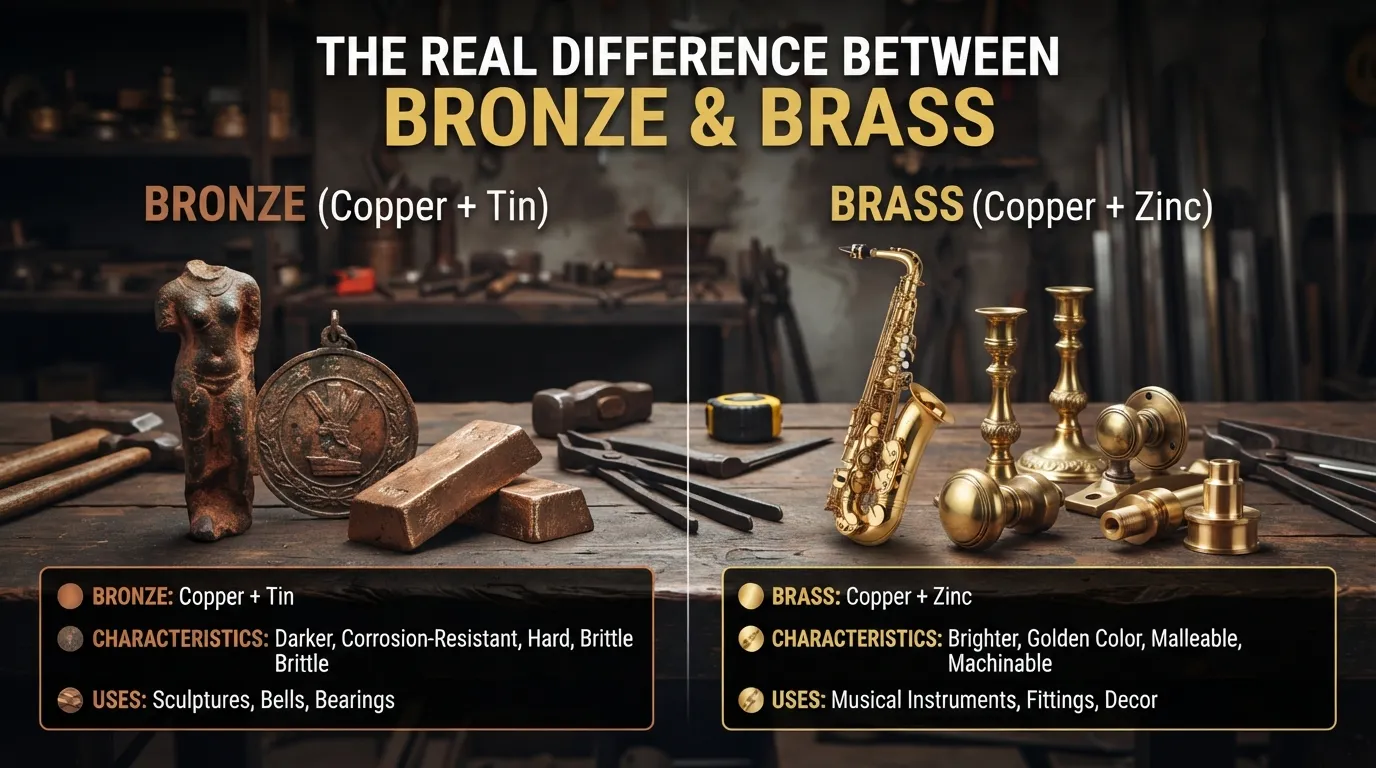
The difference between bronze and brass comes down to metal mix. Bronze is made mostly from copper and tin, while brass is made mostly from copper and zinc.
Most people call any gold colored metal “bronze” or “brass” without thinking twice. That mistake can cost real money.
Maria bought a set of antique door handles online, listed as bronze. When they arrived, a magnet test and a quick color check told a different story. She had actually bought brass, worth far less than what she paid for. Her mistake happened because she never learned the difference between bronze and brass.
So what actually separates these two metals, and how can you tell them apart before you buy?
Bronze is an alloy made mainly from copper mixed with tin. Brass is an alloy made mainly from copper mixed with zinc. That single change in the second metal creates two materials with different colors, strengths, and uses. Understanding the difference between bronze and brass helps you shop smarter, repair items correctly, and avoid costly mix ups like Maria’s.
Key Difference
The core difference between bronze and brass lies in what is mixed with copper. Bronze uses tin, giving it a reddish brown tone and strong toughness. Brass uses zinc, giving it a brighter gold tone and easier workability.
Keep reading, we break down all 10 differences in plain, simple terms below.
Why Is This Difference Important To Know?
Knowing the difference between bronze and brass matters for collectors, buyers, and builders alike. Choosing the wrong metal for a boat part, musical instrument, or piece of jewelry can lead to rust, cracking, or a poor sound.
Beginners often assume all “bronze colored” items are the same metal. Experts know better, since the wrong choice in plumbing or marine parts can cause expensive damage within just a few years.
Before The Ten Differences
If you also want to understand metal finishes, check out our guide: Difference Between Gold Plated and Gold Filled. That guide pairs well with this one, since metal composition often decides both durability and price.
10 Points Of Difference
1. Basic Definition And Meaning
Bronze is a copper alloy mixed mainly with tin. Brass is a copper alloy mixed mainly with zinc. For example, an old ship propeller is often bronze, while a brass door knob is common in many homes.
2. Origin And Main Components
Bronze dates back over 5000 years, giving its name to the Bronze Age. Brass became common much later, once zinc smelting improved. Ancient Chinese bronze bells show early bronze use, while Victorian era brass fixtures show brass becoming popular in homes.
3. Process, How It Is Made Or Done
Bronze is made by melting copper and tin together at high heat. Brass is made by melting copper and zinc together at a slightly lower heat. A bronze statue caster controls tin ratio carefully for strength, while a brass instrument maker adjusts zinc ratio for tone.
4. Time Involved Or Duration
Bronze casting often takes longer, since it needs careful cooling to avoid cracking. Brass casting moves faster, since zinc melts and blends more easily. Bell foundries making bronze bells often need extra days for cooling, while brass fitting factories can finish batches in less time.
5. Feel And Output Quality
Bronze feels heavier and has a duller, reddish brown shine. Brass feels lighter and has a brighter, golden shine. A bronze medal looks warm and matte, while a brass trumpet gleams bright and polished.
6. Primary Use Cases
Bronze is common in statues, boat fittings, and bearings. Brass is common in musical instruments, doorknobs, and plumbing fittings. The Statue of Liberty uses a copper alloy close to bronze in spirit, while a saxophone almost always uses brass.
7. Effect Or Impact
Bronze resists saltwater corrosion very well, making it ideal for marine use. Brass resists corrosion too, but performs better indoors than in saltwater. A boat propeller made from bronze can last decades at sea, while a brass faucet handle can last decades inside a home.
8. Degree Of Specificity Or Precision
Bronze alloys vary based on exact tin content, changing hardness and color. Brass alloys vary based on exact zinc content, changing brightness and flexibility. A bell maker fine tunes bronze ratio for the right ring, while a locksmith chooses a specific brass blend for smooth key cutting.
9. Can They Replace Each Other?
In many cases, no. Bronze offers better strength and saltwater resistance, while brass offers easier shaping and a brighter shine. A boat builder cannot swap bronze bolts for brass ones without risking corrosion, though some indoor decorative parts can use either.
10. Long Term Results And Lasting Impact
Bronze often lasts longer outdoors and under stress, aging into a green patina over decades. Brass tends to tarnish faster and needs more polishing to stay bright. Ancient bronze coins have survived thousands of years, while antique brass items often need regular care to avoid dullness.
Nature And Behaviour
Bronze feels solid, dependable, and quietly strong, much like an old tool that never fails under pressure. It ages gracefully outdoors, developing a green patina that many people find attractive.
Brass feels lively, bright, and easy to shape, much like a material built for detail work. It shines beautifully at first but needs more upkeep to stay looking new.
Why Do People Confuse Them?
Bronze and brass often look similar at a glance, both sharing a golden or brownish tone. Sellers sometimes label items loosely, using “bronze” as a catch all term for any copper alloy. Many buyers also skip checking the metal composition before purchasing.
A common mistake happens when someone buys a “bronze” statue online, only to discover later it is actually brass once it starts tarnishing faster than expected.
Comparison Table
| Feature | Bronze | Brass |
| Definition | Copper and tin alloy | Copper and zinc alloy |
| Origin | Ancient, dates to Bronze Age | Later, grew popular after zinc smelting improved |
| Process | Melted and cast at high heat | Melted and cast at lower heat |
| Duration | Longer cooling and casting time | Faster casting time |
| Output | Reddish brown, duller shine | Golden yellow, brighter shine |
| Main Use | Statues, marine parts, bearings | Instruments, doorknobs, plumbing |
| Impact | Strong saltwater resistance | Good indoor corrosion resistance |
| Interchangeable | Rarely, especially outdoors | Rarely, especially outdoors |
| Long Term Result | Ages into a green patina | Tarnishes and needs polishing |
| Similarity | Both are copper based alloys | Both are copper based alloys |
| Key Difference | Mixed with tin | Mixed with zinc |
📌 Save this for later, bookmark this page or share it with someone who always mixes up bronze and brass.
Which Is Better And When?
Bronze is better for outdoor statues, boat fittings, and anything exposed to saltwater, since it resists corrosion so well. Brass is better for musical instruments, indoor fixtures, and detailed hardware, since it shines brightly and shapes easily.
Quick Decision Guide
Choose Bronze if: ☑ You need strong saltwater resistance ☑ You want a piece that lasts decades outdoors ☑ You are casting a statue or bell ☑ You prefer a warm reddish brown tone
Choose Brass if: ☑ You want a bright golden shine ☑ You need an easy to shape metal ☑ You are making or buying an instrument ☑ You want affordable indoor hardware
Still unsure? Drop your question in the comments, we answer every single one.
Metaphors And Similes
Bronze is like an old sailor, weathered but tough after years at sea. Brass is like a polished performer, always ready to shine under the lights. Choosing between them is like choosing between a sturdy work boot and a shiny dress shoe.
Connotative Meaning
Bronze can feel prestigious and timeless in a positive sense, like a bronze medal at the Olympics. It can feel dull or old fashioned in a negative sense, like a rusty garden statue. Neutrally, it simply means a copper and tin alloy.
Brass can feel bold and cheerful in a positive sense, like a shining brass band instrument. It can feel showy or cheap in a negative sense, like flashy costume jewelry. Neutrally, it simply means a copper and zinc alloy.
Idioms And Proverbs
“Bold as brass” describes someone acting with confidence, sometimes too much confidence. “The bronze medal” often means a respectable third place finish in any contest. “Brass tacks” means getting down to the real, practical details of a task, as in “let’s get down to brass tacks.”
FAQ Section
What is the main difference between bronze and brass?
Bronze is made from copper and tin, giving it a reddish tone and strong durability. Brass is made from copper and zinc, giving it a brighter golden shine and easier shaping.
Can bronze be used instead of brass?
Not always. Bronze works better outdoors and in saltwater, while brass suits indoor items and instruments better. Swapping them can lead to faster wear or a mismatched appearance.
Which is better, bronze or brass?
Neither wins overall. Bronze suits outdoor and marine uses, while brass suits indoor fixtures and instruments, so the better choice depends entirely on where and how it will be used.
How long does bronze or brass last?
Bronze can last centuries outdoors, aging into a protective green patina. Brass can also last a long time indoors, though it usually needs more frequent polishing to keep its shine.
Why do people mix up bronze and brass?
Both metals share a similar golden or brownish color at first glance, and sellers often use the terms loosely, so many buyers never learn to tell them apart until problems appear.
Real World Importance
Knowing the difference between bronze and brass helps when buying antiques, choosing plumbing parts, or picking instrument materials. It protects your money, since bronze and brass carry different values. It also helps builders choose the right metal for outdoor versus indoor projects.
Conclusion
The difference between bronze and brass comes down to one key ingredient mixed with copper, tin for bronze and zinc for brass. Bronze brings strength and saltwater resistance, while brass brings a bright shine and easier shaping. Both metals serve important roles, just in very different settings.
Now that you know the difference, you’ll never mix them up again. Next time you shop for antiques, hardware, or instruments, you’ll know exactly what you are paying for.
See More: Manual vs Automatic: 10 Differences Most People Miss

I’m Ayesha Sadiqah, and I’m passionate about answering one simple question: “What’s the difference?” Through clear comparison guides, I help readers understand commonly confused words, products, concepts, and everyday topics. My goal is to make complex ideas easy to understand with accurate, practical, and reader-friendly explanations.