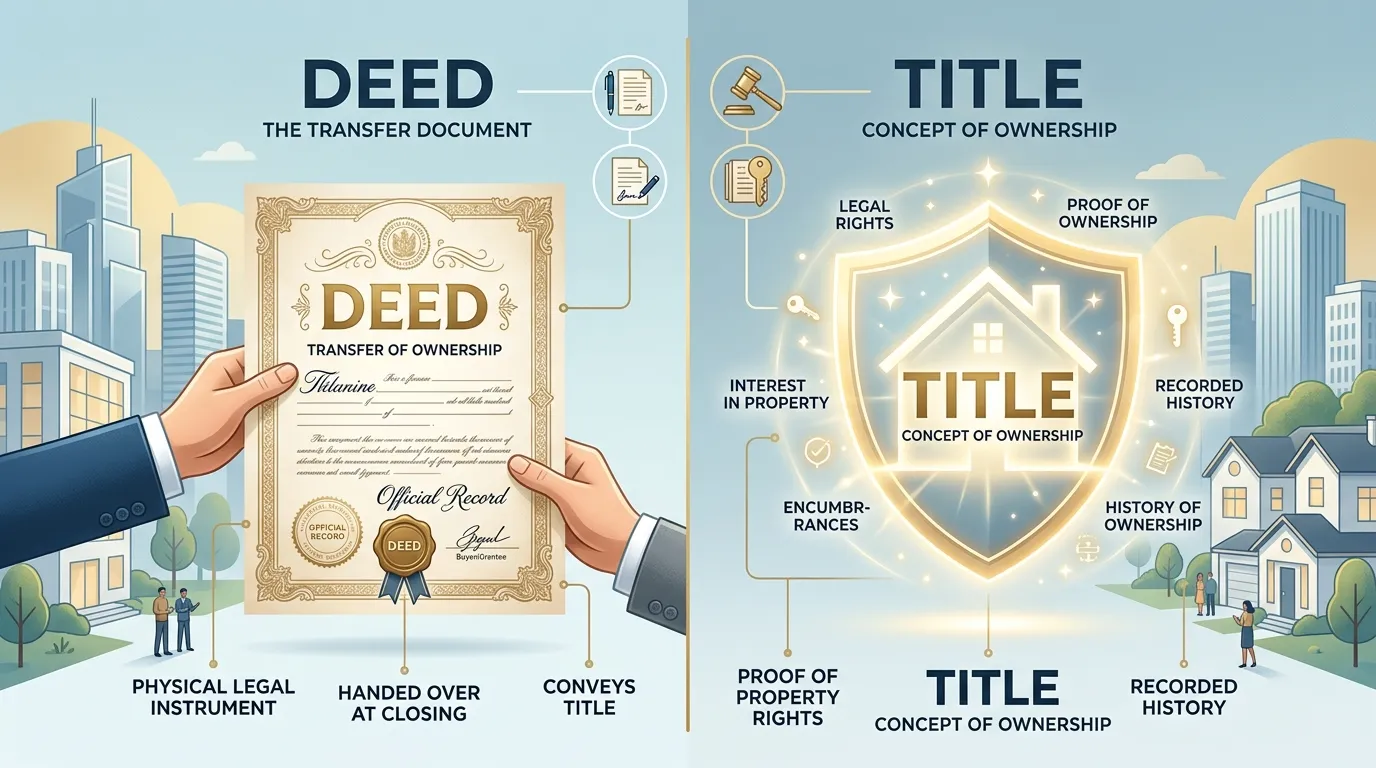
A deed is the physical legal document that transfers property. A title is the legal right of ownership itself. One is paper. One is a concept.
Most home buyers sign a stack of papers and think they own the house now. That belief can cost them years later. Confusing a deed with a title is one of the most common and costly mistakes in real estate.
Take Sana. She bought her first apartment in Lahore and framed her deed on the wall, proud of her new home. Two years later, a bank came forward claiming a lien on the property. Sana had the deed. She did not have a clean title.
So what actually separates these two words that get used like synonyms every single day? The difference between deed and title matters more than most buyers ever realize, and it can protect or destroy your ownership rights.
A deed is a document. A title is a status. Once you understand the difference between deed and title, you will never sign a property paper the same way again. This one mixup causes real financial pain for buyers every year, and it is easy to avoid once you know what to look for.
Key Difference
A deed is the piece of paper that moves ownership from one person to another. A title is your actual legal right to own, use, and sell the property. You can hold a deed and still not have a clean title if there are unpaid debts or legal claims attached to the property.
Keep reading, we break down all 10 differences in plain, simple terms below.
Why Is This Difference Important to Know?
Knowing the difference between deed and title protects your money and your future. Buyers who skip a title check can inherit someone else’s unpaid debt without knowing it. Sellers who do not understand their deed can transfer property incorrectly.
This matters whether you are buying your first small flat or your tenth commercial building. A clean title means peace of mind. A messy one means lawsuits.
Before We Continue
If you also want to understand how spelling mixups affect everyday communication, check out our guide: Commonly Confused Words on Wordiums.
The 10 Differences Between a Deed and a Title
1. Basic Definition and Meaning
A deed is a written and signed document. A title is not a document at all. It is a legal concept that proves ownership. Think of a car sale receipt versus actually owning the car. Maria signed a deed for her cottage. James simply holds title to land he inherited, with no single paper to show for it.
2. Origin and Main Components
A deed contains names, a property description, and signatures. A title comes from a chain of past ownership records. Ahmed’s deed listed his name and the plot number. Priya’s title traced back through five past owners in the county record.
3. How Each One Is Created
A deed is created and signed at the moment of sale. A title builds up over years through every past transfer of the property. Tom’s deed was signed in one afternoon at a lawyer’s office. Grace’s title took a full week to research through old county files.
4. Time Involved
Signing a deed takes minutes. Confirming a clean title can take days or weeks. Farah signed her deed in fifteen minutes at closing. Her title company spent nine days searching records before giving the green light.
5. Output Quality and Result
A deed simply exists once signed. A title can be clean, clouded, or disputed. Wei’s deed was flawless on paper, but his title had a hidden lien from years back. Noor’s deed and title matched perfectly, with no surprises.
6. Primary Use Cases
A deed is used to legally transfer property from seller to buyer. A title is used to prove and protect ownership over time. Realtors hand over a deed at closing. Lawyers pull a title report before that closing even happens.
7. Effect or Impact
A signed deed changes who holds the paperwork. A clear title changes who truly owns the rights. Hassan received a deed but later learned his title still had a court claim attached. Layla’s title was spotless, so her deed carried full legal weight.
8. Degree of Specificity
A deed is specific and detailed, listing exact boundaries and names. A title is broader, covering the full history of legal rights. Omar’s deed listed exact measurements in feet. His title covered every owner back to the year 1950.
9. Can They Replace Each Other?
No. A deed cannot prove a clean title, and a title alone is not physical proof of transfer. Sam had a deed but no proof his title was free of debt. Aisha had a strong title but still needed a deed to legally close the sale.
10. Long Term Result
A deed becomes a permanent legal record once filed. A title can change status if new claims appear later. David’s deed sat safely in the county office for decades. Mei’s title changed status when a forgotten tax debt surfaced years after her purchase.
Nature and Behaviour
A deed behaves like a snapshot. It captures one single moment of transfer and then sits still, filed away as proof of what happened.
A title behaves like a living record. It keeps growing and shifting as ownership passes from person to person across the years.
Why Do People Confuse Them?
Both words appear together during a home sale, which blends them in people’s minds. Real estate agents often use them loosely in casual talk. Movies and shows use the words interchangeably without explaining them. A common mistake happens when a buyer proudly says they “have the title” simply because they are holding a signed deed in their hands.
Comparison Table
| Feature | Deed | Title |
|---|---|---|
| Definition | A signed legal document | A legal right of ownership |
| Origin | Created at time of sale | Built from ownership history |
| Process | Signed and filed once | Checked and traced over time |
| Duration | Minutes to sign | Days or weeks to confirm |
| Output | A physical paper | A legal status, clean or clouded |
| Main Use | Transfers property | Proves ownership rights |
| Impact | Changes paperwork | Changes legal ownership |
| Interchangeable | No | No |
| Long Term Result | Permanent record | Can change if new claims appear |
| Similarity | Both relate to property ownership | Both relate to property ownership |
| Key Difference | Physical document | Legal concept of ownership |
📌 Save this for later, bookmark this page or share it with someone who always mixes up deed and title.
Which Is Better and When?
A deed matters most at the exact moment of closing, when ownership legally passes from one person to another. Without a signed deed, no sale is complete.
A title matters most before and after that sale, since it proves you actually hold clean, protected ownership. A smart buyer always checks title first, then signs the deed with confidence.
Quick Decision Guide
Focus on the deed if: ☑ You are closing a property sale today ☑ You need proof of a completed transfer ☑ A lawyer asked you to sign a transfer document ☑ You want a record of exact property boundaries
Focus on the title if: ☑ You want to confirm the property has no hidden debts ☑ You are buying property from a stranger ☑ You need to prove long term legal ownership ☑ You are applying for a mortgage or loan
Still unsure? Drop your question in the comments, we answer every single one.
Metaphors and Similes
A deed is like a receipt, proof that a transaction happened. A title is like a family tree, showing the full line of ownership. A deed and a title work together the way a key and a lock work together, one useless without the other.
Connotative Meaning
Deed carries a positive feel when it means a completed, honest sale. It carries a negative feel when someone forges or fakes one. Neutrally, it is simply a legal form, like Bilal’s deed sitting quietly in a filing cabinet.
Title carries a positive feel when it means clean, worry free ownership. It carries a negative feel when it is described as clouded or disputed. Neutrally, it is just a legal status, like Hana’s title being confirmed by her lawyer.
Idioms and Proverbs
“Clear title” is used when a property has no legal problems attached, as in “The house had clear title, so we closed within a week.” “Good deed of transfer” describes a properly signed legal document. “Title search” describes the act of digging through records, as in “Our agent ran a title search before we made an offer.” [coined expression] “Deed done, title checked” can describe finishing every legal step of a safe purchase.
FAQ
What is the main difference between deed and title? A deed is the signed paper that transfers property. A title is the actual legal right of ownership. You can hold one without fully having the other.
Can a deed be used instead of a title? No. A deed alone does not prove your title is clean. You still need a title search to confirm there are no hidden claims or debts.
Which is better, deed or title? Neither is better, they work together. A deed completes the sale. A title proves you truly and safely own the property.
How long does a deed or title last? A deed is permanent once filed. A title lasts as long as you own the property, but its status can change if new claims appear.
Why do people mix up deed and title? Both words come up together during home sales, so people blend them in daily talk. Movies and casual conversation rarely explain the real legal difference.
You might also like: → Woah or Whoa: The Real Difference Explained, wordiums.com/woah-or-whoa → Yanny or Laurel: What You Are Actually Hearing, wordiums.com/yanny-or-laurel
Real World Importance
Understanding the difference between deed and title protects your biggest investment. It helps first time buyers avoid inherited debt. It helps sellers transfer property correctly. It helps anyone applying for a mortgage understand what their bank is actually checking.
Even outside a home sale, this habit pays off. A signed form is never the whole story. The real story sits in the history behind it, and that history is exactly what a title search reveals.
Conclusion
A deed and a title sound alike but mean very different things. A deed is the signed paper that moves property from seller to buyer. A title is the actual legal right of ownership behind that paper. The difference between deed and title decides whether your property purchase is truly safe.
Now that you know the difference, you will never mix them up again. You can walk into your next property deal asking the right questions with full confidence.
See More: 350Z vs 370Z: 10 Differences Most People Miss

I’m Ayesha Sadiqah, and I’m passionate about answering one simple question: “What’s the difference?” Through clear comparison guides, I help readers understand commonly confused words, products, concepts, and everyday topics. My goal is to make complex ideas easy to understand with accurate, practical, and reader-friendly explanations.