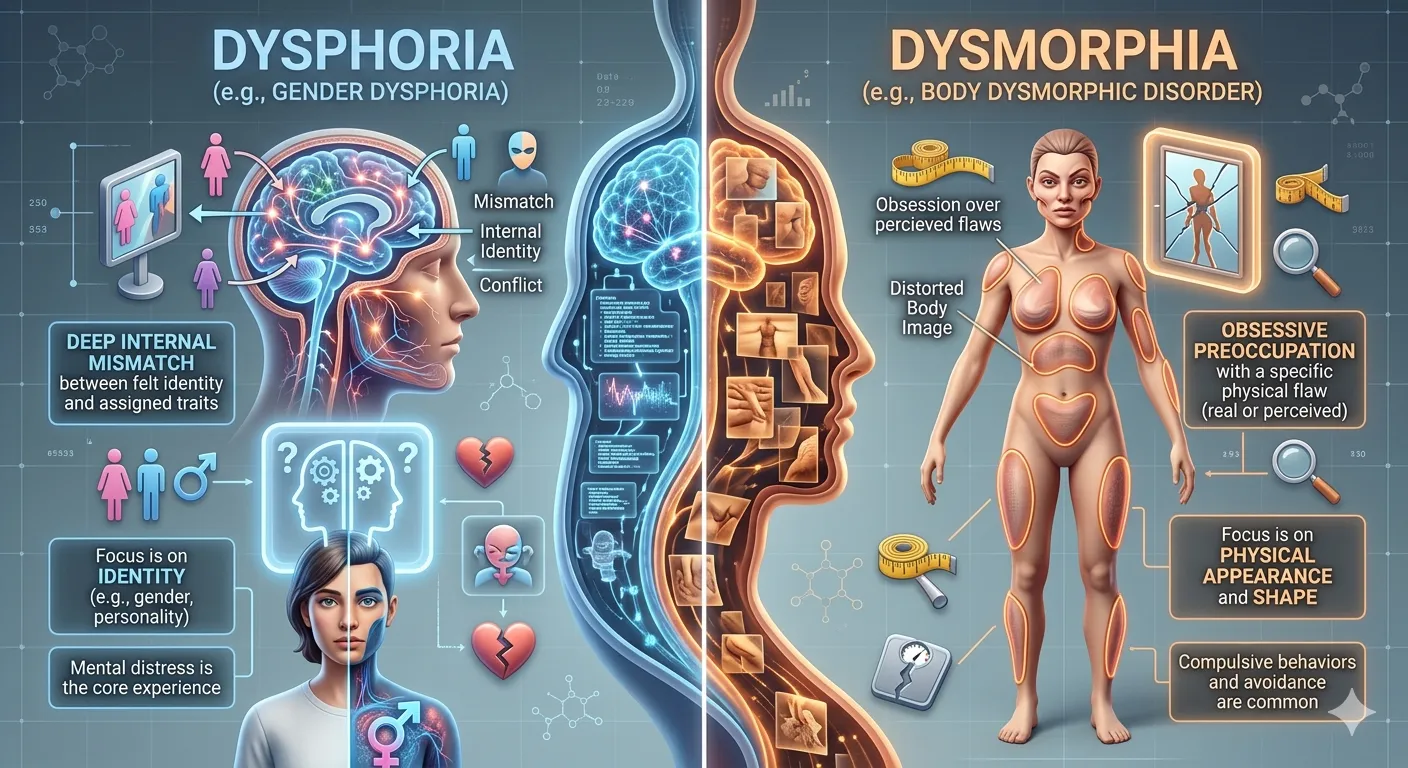
The difference between dysphoria and dysmorphia is that dysphoria refers to emotional distress, discomfort, or dissatisfaction, while dysmorphia refers to a distorted perception of one’s physical appearance. In simple terms, dysphoria affects emotions and mental well-being, whereas dysmorphia affects body image and self-perception.
Many people searching for the difference between dysphoria and dysmorphia assume the two terms mean the same thing. This confusion is understandable because the words sound similar, are often discussed in mental health contexts, and both involve some form of distress.
However, dysphoria and dysmorphia describe two very different experiences.
A person experiencing dysphoria may feel persistent emotional discomfort, dissatisfaction, or psychological distress. A person experiencing dysmorphia, on the other hand, may have a distorted view of their physical appearance and become preoccupied with perceived flaws that others may not notice.
Understanding the distinction is important for students, healthcare professionals, writers, educators, and anyone interested in mental health terminology. Using the correct term improves communication and helps avoid misunderstandings about sensitive psychological topics.
In this comprehensive guide, you’ll learn:
- What dysphoria means
- What dysmorphia means
- The key differences between dysphoria and dysmorphia
- Real-world examples
- Common misconceptions
- Frequently asked questions
- When to use each term correctly
Difference Between Dysphoria and Dysmorphia Quick Answer
The simplest way to remember the difference is:
- Dysphoria = Emotional distress or discomfort
- Dysmorphia = Distorted perception of physical appearance
Quick Examples
✅ Dysphoria Example
A person may experience dysphoria when they feel persistent emotional discomfort or dissatisfaction.
✅ Dysmorphia Example
A person with dysmorphia may believe a normal physical feature is severely flawed despite reassurance from others.
Easy Memory Trick
Remember:
- Feelings = Dysphoria
- Appearance = Dysmorphia
What Is Dysphoria?
Dysphoria is a psychological state characterized by feelings of discomfort, dissatisfaction, unease, sadness, or emotional distress.
The severity can vary from mild discomfort to intense psychological suffering.
Common experiences associated with dysphoria may include:
- Persistent unhappiness
- Emotional discomfort
- Irritability
- Anxiety
- Feelings of dissatisfaction
- Psychological distress
Dysphoria is not a diagnosis by itself in many cases but may occur alongside various mental health conditions or life experiences.
Dysphoria Examples
- She experienced intense dysphoria after a major life change.
- The patient reported ongoing feelings of emotional dysphoria.
- Chronic stress contributed to periods of dysphoria and anxiety.
What Is Dysmorphia?
Dysmorphia refers to a distorted perception of one’s physical appearance.
A person experiencing dysmorphia may focus excessively on perceived flaws in their body or appearance, even when those flaws are minor or not noticeable to others.
This distorted self-image can significantly affect daily life, confidence, relationships, and mental well-being.
Common concerns associated with dysmorphia include:
- Obsessive focus on appearance
- Excessive mirror checking
- Comparing oneself to others
- Avoiding social situations
- Persistent dissatisfaction with physical features
Dysmorphia Examples
- He became preoccupied with a minor facial feature due to dysmorphia.
- Her dysmorphia caused significant anxiety about her appearance.
- The therapist discussed strategies for managing body dysmorphia.
The Origin and Meaning of Dysphoria vs Dysmorphia
Understanding the origins of these words makes them easier to remember.
Dysphoria Etymology
The word dysphoria comes from Greek roots:
- Dys = difficult, bad, or impaired
- Phoros = bearing or carrying
The term literally suggests difficulty bearing or enduring something emotionally.
Dysmorphia Etymology
The word dysmorphia also comes from Greek:
- Dys = abnormal or impaired
- Morphe = shape or form
The term relates to an abnormal perception of physical form or appearance.
Why People Confuse Them
The confusion exists because:
- Both words begin with “dys”
- Both involve distress
- Both are used in psychology and mental health discussions
- Both can affect self-esteem and quality of life
Despite these similarities, they describe fundamentally different experiences.
Difference Between Dysphoria and Dysmorphia Explained Key Differences
| Feature | Dysphoria | Dysmorphia |
| Definition | Emotional distress or discomfort | Distorted perception of appearance |
| Primary Focus | Feelings and emotions | Physical appearance |
| Affects | Emotional well-being | Body image and self-perception |
| Common Context | Mental health and psychology | Body image and appearance concerns |
| Main Concern | Emotional suffering | Perceived physical flaws |
| Example | Feeling persistent emotional discomfort | Believing a normal feature looks defective |
Core Difference
The most important distinction is:
Dysphoria affects how you feel.
Dysmorphia affects how you see yourself.
Dysphoria vs Dysmorphia: Real-Life Examples
Example 1: Emotional Distress
A person feels persistent sadness, discomfort, and dissatisfaction without focusing on appearance.
✅ This is dysphoria.
Example 2: Appearance Concerns
A person becomes obsessed with a small facial feature that others barely notice.
✅ This is dysmorphia.
Example 3: Mental Health Discussion
A therapist discusses emotional discomfort affecting daily functioning.
✅ Dysphoria is the correct term.
Example 4: Body Image Discussion
A psychologist discusses distorted beliefs about physical appearance.
✅ Dysmorphia is the correct term.
Which Term Should You Use?
For Students
Use:
- Dysphoria when discussing emotions or psychological distress.
- Dysmorphia when discussing body image concerns.
For Healthcare Professionals
Use the term that accurately reflects the patient’s experience.
Precision is important because these concepts describe different psychological phenomena.
For Writers and Journalists
Avoid using dysphoria and dysmorphia interchangeably.
Incorrect usage can create confusion and spread misinformation.
For Everyday Conversations
Remember:
- Emotional discomfort = Dysphoria
- Appearance distortion = Dysmorphia
Common Mistakes When Using Dysphoria and Dysmorphia
Many people accidentally misuse these terms.
Mistake 1: Treating Them as Synonyms
❌ Dysphoria and dysmorphia mean the same thing.
✅ They describe different experiences.
Mistake 2: Linking Dysphoria Only to Appearance
❌ Dysphoria is a body image issue.
✅ Dysphoria primarily refers to emotional distress.
Mistake 3: Defining Dysmorphia as Emotional Distress
❌ Dysmorphia means feeling emotionally uncomfortable.
✅ Dysmorphia refers to distorted perception of appearance.
Mistake 4: Oversimplifying Dysmorphia
❌ Dysmorphia is just low self-esteem.
✅ Dysmorphia involves a distorted perception of physical appearance.
Why These Mistakes Happen
- Similar spelling
- Similar pronunciation
- Mental health terminology overlap
- Inaccurate online explanations
- Social media misuse
Difference Between Dysphoria and Dysmorphia in Professional Contexts
Medical Context
The patient reported symptoms of dysphoria following a stressful life event.
Psychological Assessment
The evaluation revealed concerns consistent with body dysmorphia.
Educational Setting
Students learned the difference between dysphoria and dysmorphia during a psychology lecture.
News Reporting
Experts emphasized the importance of distinguishing dysphoria from dysmorphia in mental health discussions.
Difference Between Dysphoria and Dysmorphia Search Trends and Growing Interest
Interest in the difference between dysphoria and dysmorphia has increased significantly as awareness of mental health, body image, and psychological well-being continues to grow.
Who Searches for This Topic?
Common audiences include:
- Students
- Psychology learners
- Mental health advocates
- Healthcare professionals
- Journalists
- Educators
- Researchers
- General readers
Search Intent
Most users searching this topic want to know:
- What dysphoria means
- What dysmorphia means
- Whether the terms are interchangeable
- How they relate to mental health
- Which term is correct in specific situations
Why Understanding the Difference Matters
Using accurate terminology:
- Improves communication
- Reduces misunderstandings
- Supports mental health literacy
- Encourages respectful discussions
- Helps people better understand psychological concepts
Standalone Comparison Table
| Term | Meaning | Context | Best Used When |
| Dysphoria | Emotional distress or discomfort | Psychology and mental health | Discussing emotions and psychological discomfort |
| Dysmorphia | Distorted perception of appearance | Body image and psychology | Discussing perceived physical flaws |
| Gender Dysphoria | Distress related to a mismatch between gender identity and assigned sex | Clinical and educational settings | Discussing gender-related emotional distress |
| Body Dysmorphia | Excessive concern about perceived appearance flaws | Mental health and body image discussions | Discussing appearance-focused concerns |
Frequently Asked Questions
What is the difference between dysphoria and dysmorphia?
Dysphoria refers to emotional distress, discomfort, or dissatisfaction. Dysmorphia refers to a distorted perception of physical appearance or body image.
Is dysphoria the same as dysmorphia?
No. Although both involve distress, dysphoria affects emotions while dysmorphia affects how a person perceives their appearance.
What does dysphoria mean?
Dysphoria is a state of emotional discomfort, dissatisfaction, unease, or psychological distress.
What does dysmorphia mean?
Dysmorphia refers to a distorted perception of one’s physical appearance, often involving excessive concern about perceived flaws.
Can someone experience both dysphoria and dysmorphia?
Yes. A person may experience emotional distress and body image concerns simultaneously, although the two experiences are distinct.
How do you remember the difference between dysphoria and dysmorphia?
Use this simple rule:
- Dysphoria = Feelings
- Dysmorphia = Appearance
Why are dysphoria and dysmorphia often confused?
They are frequently confused because they sound similar, share Greek roots, appear in mental health discussions, and both involve distress.
Conclusion
The difference between dysphoria and dysmorphia is straightforward once you understand their core meanings.
Dysphoria refers to emotional distress, discomfort, dissatisfaction, or psychological unease. Dysmorphia refers to a distorted perception of physical appearance and body image.
Although the terms are often confused because of their similar spelling and pronunciation, they describe different psychological experiences and should not be used interchangeably.
If you remember one thing from this guide, remember this:
✅ Dysphoria affects how you feel.
✅ Dysmorphia affects how you see yourself.
Understanding this distinction will help you use both terms correctly, communicate more accurately, and better understand discussions related to mental health and body image.
Read More:
What’s the Real Difference Between Greed and Gluttony?

I’m Rubab, an SEO content writer specializing in high-quality comparison articles that simplify complex topics and highlight key differences with clarity and accuracy. My content combines in-depth research, proven SEO strategies, and a reader-first approach to deliver valuable insights across language, technology, health, food, and lifestyle topics.
🔍📈 Turning complex comparisons into clear, search-friendly content that informs, engages, and ranks. ✨🏆