ADHD is a lifelong condition that affects attention and impulse control, while bipolar disorder is a mood disorder that causes episodes of unusually high and low moods.
Mia was talking with a friend about her difficulty focusing at work. Someone suggested she might have bipolar disorder because she seemed energetic at times and distracted at others. After speaking with a doctor, Mia learned that ADHD and bipolar disorder are very different conditions.
Many people confuse these two because some symptoms can look similar from the outside. Both can involve impulsive behavior, restlessness, and trouble staying organized. However, the causes, symptoms, and treatment approaches are not the same.
Think of it like a car. ADHD is often like having a constantly active engine, while bipolar disorder is more like experiencing major shifts between different driving conditions. Understanding the difference between ADHD and bipolar can help people seek the right support and treatment.
The Key Difference
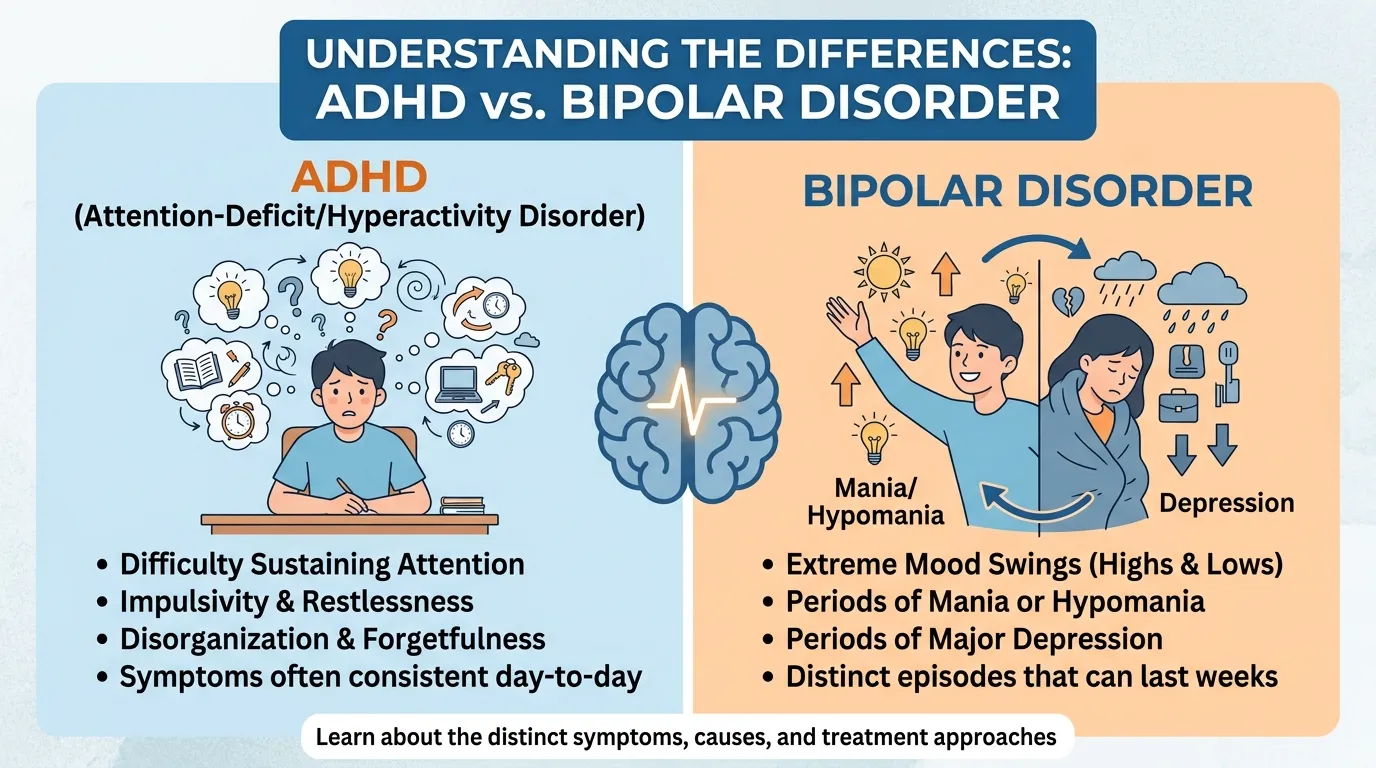
ADHD mainly affects attention, focus, organization, and impulse control. Bipolar disorder mainly affects mood, causing episodes of mania or hypomania and depression.
The most important difference is that ADHD symptoms are generally ongoing, while bipolar symptoms often occur in distinct mood episodes.
Why Does This Difference Matter?
Understanding the difference between ADHD and bipolar is important because the two conditions are diagnosed and treated differently. Someone with ADHD may need support for focus and executive functioning. Someone with bipolar disorder may need treatment focused on mood stability.
When these conditions are confused, people may receive the wrong type of help. That can delay improvement and create unnecessary challenges at school, work, or home.
If you think you or someone you know may have either condition, speaking with a qualified mental health professional is always the right first step.
Looking closer at their symptoms, causes, and effects makes it easier to see how these conditions differ.
10 Differences Between ADHD and Bipolar
1. Basic Definition
ADHD stands for Attention-Deficit/Hyperactivity Disorder. It affects attention, activity level, and impulse control. Bipolar disorder is a mood disorder marked by significant shifts in mood and energy.
Example 1: A child with ADHD may struggle to stay focused in class.
Example 2: A person with bipolar disorder may experience a period of unusually elevated mood.
2. Origin or Source
ADHD is considered a neurodevelopmental condition that usually begins in childhood. Bipolar disorder is a mood disorder linked to changes in brain function and other factors.
Example 1: ADHD symptoms often appear before age 12.
Example 2: Bipolar symptoms commonly emerge during the teen or young adult years.
3. How It Is Identified
ADHD is identified through patterns of inattention, hyperactivity, and impulsivity. Bipolar disorder is identified through episodes of mania, hypomania, and depression.
Example 1: Frequently losing items may suggest ADHD.
Example 2: Experiencing a manic episode may suggest bipolar disorder.
4. Time, Duration, or How Long It Lasts
ADHD symptoms are generally ongoing and present across many situations. Bipolar symptoms often appear in episodes that may last days, weeks, or longer.
Example 1: Difficulty focusing may occur daily in ADHD.
Example 2: A depressive episode may last several weeks in bipolar disorder.
5. Feel or Output Quality
ADHD often feels like constant mental distraction or restlessness. Bipolar disorder often involves dramatic changes in mood and energy.
Example 1: A person with ADHD may jump between tasks.
Example 2: A person in a manic state may feel unusually energetic.
6. Primary Use Cases in Diagnosis
Doctors look for attention and behavior patterns when assessing ADHD. For bipolar disorder, doctors look for mood episodes and their impact.
Example 1: School reports may help assess ADHD.
Example 2: Mood history may help assess bipolar disorder.
7. Effect or Impact
ADHD can affect organization, learning, and time management. Bipolar disorder can affect relationships, decision-making, and emotional well-being.
Example 1: ADHD may make deadlines difficult.
Example 2: Bipolar disorder may affect mood stability.
8. Specificity and Precision
ADHD focuses on attention and self-regulation difficulties. Bipolar disorder specifically involves major mood changes that go beyond normal ups and downs.
Example 1: Distractibility is common in ADHD.
Example 2: Mania is specific to bipolar disorder.
9. Can They Replace Each Other?
No. These conditions are different diagnoses. However, some people may have both conditions at the same time.
Example 1: ADHD symptoms alone do not mean bipolar disorder.
Example 2: Bipolar disorder does not automatically mean someone has ADHD.
10. Long-Term Result
With treatment and support, people with ADHD can improve focus and organization. With treatment and management, people with bipolar disorder can work toward mood stability.
Example 1: ADHD coaching may improve daily routines.
Example 2: Bipolar treatment may help reduce mood episodes.
Nature and Character
ADHD tends to be persistent and consistent. Symptoms often appear across school, work, and home environments. Challenges usually involve attention, planning, and impulse control.
Bipolar disorder tends to be cyclical. Symptoms may change significantly depending on whether a person is experiencing mania, hypomania, depression, or a more stable mood period.
Why Do People Mix Them Up?
Both conditions can involve impulsive behavior, high energy, talking a lot, and difficulty concentrating. Social media discussions sometimes oversimplify the symptoms. People may also notice only the outward behavior without understanding the underlying cause.
A common mistake occurs when someone assumes that high energy automatically means bipolar disorder when ADHD may be the actual cause.
Comparison Table
| Feature | ADHD | Bipolar Disorder |
|---|---|---|
| Definition | Neurodevelopmental condition | Mood disorder |
| Origin | Usually begins in childhood | Often appears later |
| Process / How Identified | Attention and impulse symptoms | Mood episode symptoms |
| Variety / Duration | Ongoing symptoms | Episodic symptoms |
| Output / Quality | Focus and organization difficulties | Mood and energy shifts |
| Main Use | Attention-related diagnosis | Mood-related diagnosis |
| Impact | Affects productivity and planning | Affects emotional stability |
| Treatment Approach | Behavioral support and other treatments | Mood-focused treatment and support |
| Interchangeable? | No | No |
| Long-Term Result | Better functioning with management | Better mood stability with management |
| Key Similarity | Both can affect daily life | Both can affect daily life |
| Key Difference | Attention regulation issues | Mood episode disorder |
Which Is Better and When?
Neither condition is “better” because both can create real challenges. ADHD requires strategies that improve focus, organization, and self-management. Bipolar disorder requires approaches that support mood stability and emotional health.
The goal is not to compare which is better but to understand which condition is present so the right treatment and support can be provided.
Quick Decision Checklist
ADHD may involve:
☑ Ongoing attention difficulties
☑ Frequent distractibility
☑ Impulsive actions
☑ Symptoms since childhood
Bipolar disorder may involve:
☑ Distinct mood episodes
☑ Periods of mania or hypomania
☑ Episodes of depression
☑ Significant mood changes over time
Metaphors and Similes
ADHD is like a radio that keeps switching stations before one song finishes.
Bipolar disorder is like weather that can shift between very different conditions over time.
Together, they are like two roads that may look similar from a distance but lead to different destinations.
[used in: intro]
Connotative Meaning
ADHD is sometimes associated positively with creativity, energy, and quick thinking. For example, some people view ADHD traits as helpful in creative fields. Negatively, it may be misunderstood as laziness or lack of effort. Neutrally, it refers to a recognized neurodevelopmental condition.
Bipolar disorder is sometimes associated positively with resilience and self-awareness developed through treatment. Negatively, it is often misunderstood because of stereotypes about mood changes. Neutrally, it refers to a medical mood disorder diagnosed by professionals.
Idioms and Expressions
“Mind racing” is often used when discussing attention challenges. Example: His mind was racing during the meeting.
“Emotional roller coaster” is commonly used for major mood changes. Example: She described the year as an emotional roller coaster.
[coined expression] “Changing gears too fast.” Example: He felt like his thoughts were changing gears too fast to keep up.
Frequently Asked Questions
Q1: What is the main difference between ADHD and bipolar?
ADHD primarily affects attention, organization, and impulse control. Bipolar disorder primarily affects mood. The key distinction is that bipolar disorder involves mood episodes, while ADHD symptoms tend to be more continuous.
Q2: Can ADHD be mistaken for bipolar disorder?
Yes. Some symptoms, such as restlessness or impulsivity, can overlap. A professional assessment helps identify whether the symptoms are related to attention regulation, mood episodes, or both.
Q3: Which one is more difficult to live with?
Experiences vary from person to person. The impact depends on symptom severity, available support, treatment effectiveness, and individual circumstances rather than the diagnosis alone.
Q4: Is ADHD more serious than bipolar disorder?
They affect people in different ways. Bipolar disorder involves significant mood episodes that can greatly affect daily life. ADHD can also create substantial challenges with education, work, and relationships. A professional evaluation is needed to understand individual risks and needs.
Q5: Why do people mix up ADHD and bipolar?
People often focus on visible behaviors such as high energy or impulsiveness. Because some symptoms overlap, it can be difficult to tell the difference without understanding the pattern and duration of symptoms.
Real-World Importance
Understanding the difference between ADHD and bipolar helps parents, teachers, employers, and healthcare providers recognize symptoms more accurately. It matters during school evaluations, workplace accommodations, and mental health assessments. Correct identification can help people receive more appropriate support and treatment.
Conclusion
Remember Mia from the beginning? After speaking with a healthcare professional, she learned that attention problems and mood disorders are not the same thing. That understanding helped her move toward the right support.
The difference between ADHD and bipolar centers on what each condition affects most. ADHD mainly involves attention, impulsivity, and organization challenges. Bipolar disorder involves significant mood episodes that can include mania, hypomania, and depression. While some symptoms may appear similar, the overall patterns are different. Recognizing those differences is an important step toward proper diagnosis and care.
If you or someone you know is experiencing symptoms of ADHD or bipolar disorder, please speak with a licensed therapist or doctor. These are real conditions, and the right professional can make a real difference.
Learning more about mental health is a powerful step toward understanding yourself and others.

I’m Nathan Brooks, an independent writer passionate about vocabulary clarity and usage differences. On Hubdifference.com, I create easy-to-understand comparisons covering American and British English variations. I focus on simple language, practical tips, and reader-friendly explanations. Helping people write with clarity and confidence is what drives my work.