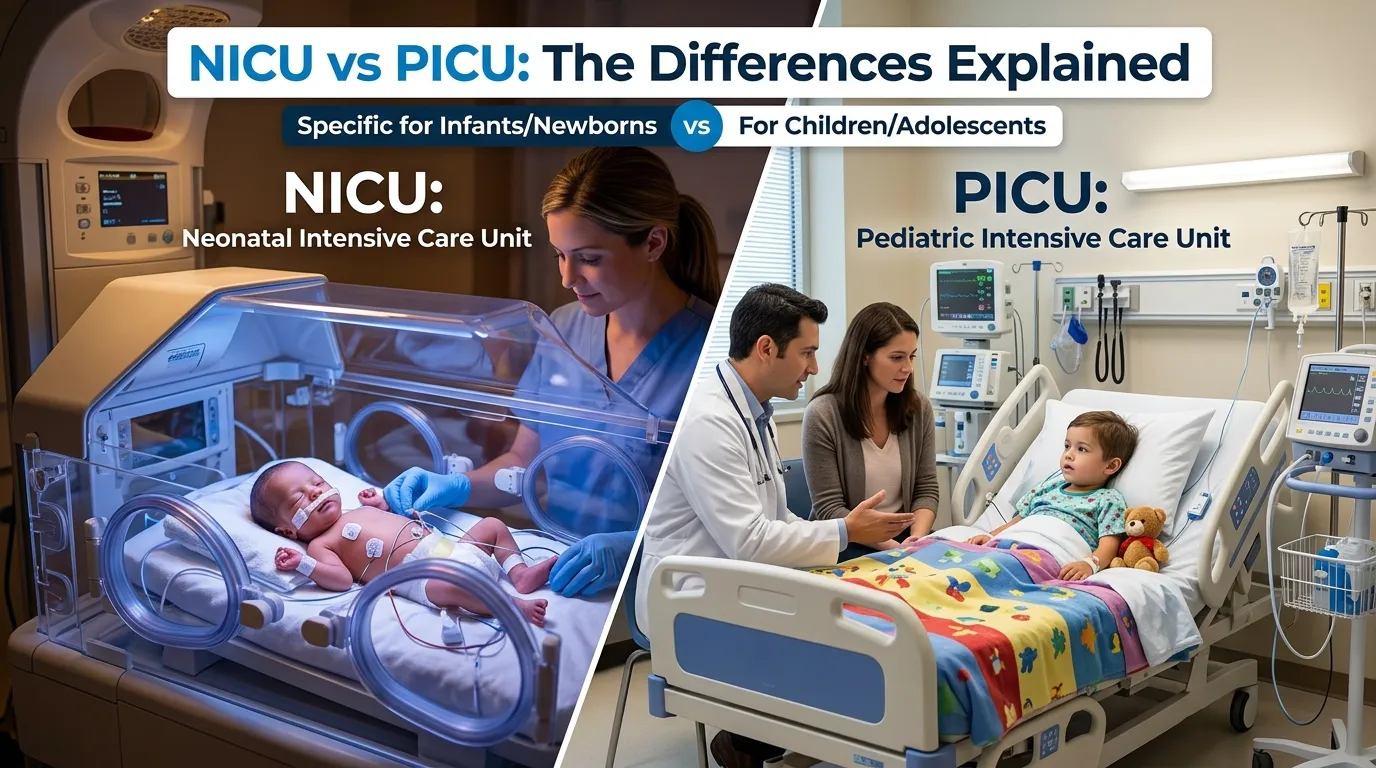
A NICU cares for newborn babies with serious medical needs, while a PICU treats older infants, children, and teenagers who need intensive care.
Emma had just become a new mom. Her baby was born early and needed special care. When a nurse mentioned the NICU, Emma thought it was the same as the PICU she had heard about on TV. She soon learned they served different patients.
Many parents hear these terms during stressful moments and are not sure what they mean. A NICU is a hospital unit for newborn babies who need close medical attention. A PICU is a unit for infants, children, and teens with serious illnesses or injuries. Think of them like two special rescue teams. One focuses on newborns, while the other helps older children. Understanding the difference between NICU and PICU can make hospital conversations much easier to follow. The details may surprise you.
The Key Difference
A NICU treats newborn babies, especially those born early or with health problems. A PICU treats older infants, children, and teenagers who need intensive medical care.
The biggest difference is the age and developmental stage of the patients.
Why Does This Difference Matter?
Knowing the difference between NICU and PICU helps families understand where a child will receive treatment. The staff, equipment, and medical training in each unit are designed for different age groups.
If someone mixes them up, they may misunderstand a child’s condition or the type of care being provided. Hospitals separate these units because newborns have very different medical needs than older children.
If you think your child may need specialized medical care, speaking with a qualified healthcare professional is always the right first step.
These units may seem similar from the outside, but their patients, treatments, and goals differ in many important ways that become clear when we look closer.
10 Differences Between NICU and PICU
Basic Definition
A NICU stands for Neonatal Intensive Care Unit. It provides advanced care for newborn babies. A PICU stands for Pediatric Intensive Care Unit. It provides advanced care for children beyond the newborn stage.
Example 1: A premature baby may stay in a NICU.
Example 2: A 10-year-old recovering from severe pneumonia may stay in a PICU.
Origin or Source
The NICU was created to meet the unique needs of newborns, especially premature infants. The PICU was developed to care for older children with serious illnesses, injuries, or complications.
Example 1: A baby born at 28 weeks may require NICU care.
Example 2: A child injured in a bicycle accident may require PICU care.
How It Is Made or Done
NICU care focuses on supporting tiny bodies that are still developing. PICU care focuses on stabilizing and treating serious conditions in growing children.
Example 1: A NICU team may help a newborn breathe.
Example 2: A PICU team may monitor a child after major surgery.
Time, Duration, or How Long It Lasts
NICU stays can last days, weeks, or even months depending on a baby’s growth and health. PICU stays are often shorter but depend on the child’s illness or recovery progress.
Example 1: A premature infant may stay in the NICU for two months.
Example 2: A child with a severe infection may stay in the PICU for one week.
Flavor, Feel, or Output Quality
A NICU often feels quiet and focused on newborn development. The equipment is designed for very small patients. A PICU may feel busier because it serves children with many different conditions.
Example 1: NICU incubators help keep babies warm.
Example 2: PICU rooms may contain equipment for larger children.
Primary Use Cases
NICUs commonly treat premature birth, low birth weight, and birth complications. PICUs commonly treat severe infections, injuries, organ problems, and recovery after surgery.
Example 1: A baby with breathing difficulties may enter the NICU.
Example 2: A child with a serious asthma attack may enter the PICU.
Effect or Impact
NICU care helps newborns survive and develop during their earliest days. PICU care helps children recover from critical illnesses and injuries.
Example 1: NICU support can help a premature baby gain strength.
Example 2: PICU treatment can help a child recover after trauma.
Specificity and Precision
NICU care is highly specialized for newborn babies only. PICU care covers a wider age range and a broader set of medical conditions.
Example 1: A newborn belongs in the NICU.
Example 2: A teenager belongs in the PICU if intensive care is needed.
Can They Replace Each Other?
These units cannot usually replace one another because each has specially trained staff and equipment. Patients receive the best care in the unit designed for their age group.
Example 1: A newborn is generally not treated in a PICU.
Example 2: A school-age child is generally not treated in a NICU.
Long-Term Result
NICU treatment aims to help babies grow and leave the hospital safely. PICU treatment aims to help children recover and return to normal life activities.
Example 1: A NICU graduate may go home after reaching healthy milestones.
Example 2: A PICU patient may return to school after recovery.
Nature and Character
A NICU feels nurturing and development-focused. Every detail supports fragile newborns during a critical stage of life. Staff pay close attention to growth, feeding, and early development.
A PICU feels responsive and adaptable. The team handles many different medical emergencies and conditions. Care often focuses on rapid treatment and recovery for older children.
Why Do People Mix Them Up?
Many people only hear the words during a medical emergency. Both units are inside hospitals and provide intensive care. The names also sound similar because both end with “ICU.” Parents may assume they serve the same purpose.
A common mistake happens when someone hears that a child is in intensive care and automatically assumes the child is in the NICU.
Comparison Table
| Feature | NICU | PICU |
|---|---|---|
| Definition | Intensive care for newborns | Intensive care for children |
| Origin | Developed for neonatal care | Developed for pediatric care |
| Process / How Made | Supports newborn development | Treats critical childhood conditions |
| Variety / Duration | Often longer stays for growth | Length depends on illness recovery |
| Output / Quality | Focus on survival and development | Focus on recovery and stabilization |
| Main Use | Prematurity and birth complications | Serious illness and injury treatment |
| Impact | Supports newborn health | Restores child health |
| Treatment Approach | Specialized neonatal medicine | Specialized pediatric medicine |
| Interchangeable? | No, age-specific care | No, age-specific care |
| Long-Term Result | Healthy transition home | Return to normal childhood activities |
| Key Similarity | Both provide intensive monitoring | Both provide intensive monitoring |
| Key Difference | Newborn patients only | Older infants, children, and teens |
Which Is Better and When?
A NICU is the better choice when a newborn needs specialized care after birth. For example, a baby born very early benefits from equipment and staff trained specifically for neonatal needs.
A PICU is the better choice when an older child faces a serious illness or injury. For example, a child recovering from emergency surgery needs the expertise available in a PICU. Neither is better overall because each serves a different age group.
Quick Decision Checklist
Choose NICU if:
☑ Patient is a newborn baby
☑ Premature birth occurred
☑ Birth complications exist
☑ Specialized neonatal care is needed
Choose PICU if:
☑ Patient is beyond newborn stage
☑ Serious illness requires monitoring
☑ Recovery after major surgery
☑ Critical injury needs treatment
Metaphors and Similes
A NICU is a protected greenhouse where the smallest lives receive extra care to grow stronger.
A PICU is an emergency repair workshop where young bodies receive intensive help to recover.
Together, they work like two specialized rescue teams serving different stages of childhood.
[used in: intro]
Connotative Meaning
NICU often carries a positive sense of hope because it helps vulnerable newborns survive and grow. For example, parents may feel grateful when a baby receives expert neonatal care. It can also bring worry because it often means a newborn faces health challenges. In a neutral sense, it simply refers to a neonatal intensive care unit.
PICU often suggests advanced medical support for children. For example, families may feel relieved knowing experts are available around the clock. It can also create concern because children in the PICU often have serious conditions. In a neutral sense, it refers to a pediatric intensive care unit.
Idioms and Expressions
“Tiny fighter” is often used for babies receiving NICU care. Example: The tiny fighter gained weight every week.
“Back on their feet” fits many PICU recoveries. Example: After treatment, the child was back on their feet.
[coined expression] “Growing through the wires.” Example: The newborn was growing through the wires and becoming stronger each day.
Frequently Asked Questions
Q1: What is the main difference between NICU and PICU?
The main difference is the age of the patients. NICUs care for newborn babies, while PICUs care for older infants, children, and teenagers. Hospitals separate them because each age group has unique medical needs.
Q2: Can NICU be used instead of PICU?
Usually no. Each unit has different equipment, specialists, and treatment methods. Newborns need neonatal experts, while older children need pediatric experts trained for their stage of development.
Q3: Which one is better NICU or PICU?
Neither is better overall. A NICU is best for newborns needing specialized support, while a PICU is best for older children with critical conditions. The patient’s age determines the appropriate unit.
Q4: Is NICU more serious than PICU?
Not necessarily. Both units care for patients with significant medical needs. The seriousness depends on the specific condition, risks involved, and the level of treatment required rather than the name of the unit itself.
Q5: Why do people mix up NICU and PICU?
People often hear both terms during stressful situations. The names sound alike, both involve intensive care, and many people are unfamiliar with hospital departments until a family member needs treatment.
Real-World Importance
Understanding the difference between NICU and PICU helps parents, relatives, and caregivers communicate better with medical staff. It matters when discussing premature birth, childhood illness, emergency surgery, or hospital transfers. Knowing which unit provides care can reduce confusion and help families better understand a child’s treatment journey.
Conclusion
Remember Emma from the beginning? She now understands exactly why her newborn was placed in the NICU and not the PICU. That knowledge helped her feel more confident during a difficult time.
The difference between NICU and PICU centers on the patients they serve. NICUs care for newborn babies during their earliest and most delicate days. PICUs care for older children facing serious illnesses or injuries. They use different specialists, equipment, and treatment approaches because children at different ages need different kinds of care. One focuses on helping newborns grow stronger, while the other focuses on helping older children recover from critical conditions.
If you or someone you know is experiencing symptoms requiring urgent medical attention, please speak with a licensed doctor. These are important healthcare settings, and the right professional can make a real difference.
Learning these terms can make medical conversations easier and help you feel more informed when it matters most.

I’m Ethan Caldwell, a language enthusiast who enjoys simplifying confusing English word pairs for everyday readers. At Hubdifference.com, I write clear and practical comparisons that help users choose the right word with confidence. My goal is to remove confusion and make English learning simple, useful, and accessible. I believe the right words create better communication.