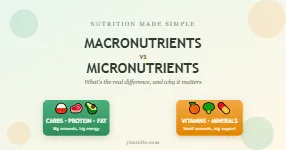
Macronutrients are nutrients your body needs in big amounts for energy, like carbs, protein, and fat. Micronutrients are vitamins and minerals your body needs in small amounts to stay healthy.
Most people think all nutrients are the same. They are not. Mixing them up can hurt your health goals.
Maria started a new diet last year. She ate lots of kale and almonds. She thought this covered all her needs. But she did not eat enough protein or carbs. She felt tired by week two. Her mistake was simple. She mixed up micronutrients with macronutrients. Vitamins alone cannot give you fuel.
Here is the truth. The difference between macronutrients and micronutrients changes how you eat and feel. Macronutrients give you energy. Micronutrients keep your body running well. Mix up macronutrients and micronutrients, and your energy or health can suffer.
So what makes these two nutrient groups different? Let’s break it down step by step.
Key Difference
The key difference is amount and job. Macronutrients are carbs, protein, and fat. You need them in large amounts. They give you energy. Micronutrients are vitamins and minerals. You need them in tiny amounts. They help your body work well.
Keep reading. We break down all 10 differences below in simple terms.
Why Is This Difference Important to Know?
Knowing this difference helps you build better meals. An athlete who skips macronutrients will feel weak. They will feel slow. This happens no matter how many vitamins they take.
Someone who skips micronutrients may still get tired. They may get sick more often. Their bones may get weak. Both beginners and experts need to know this. It helps you avoid gaps in your diet.
Linking Hook
Now you know the basics. Next, learn how to balance both nutrient types. Check out our guide: How Many Calories Do You Really Need Each Day.
10 Points of Difference
1. Basic Meaning
Macronutrients are nutrients your body needs in large amounts. They give you energy. Micronutrients are nutrients your body needs in small amounts. They do not give energy. They support your body.
Example: A chicken breast gives you protein. This is a macronutrient. One almond gives you a little vitamin E. This is a micronutrient.
2. Where They Come From
Macronutrients come from foods like grains, meat, dairy, and oil. Micronutrients come from many foods too. This includes fruits and vegetables.
Example: Brown rice gives you carbs. This is a macronutrient. Spinach gives you iron. This is a micronutrient.
3. How Your Body Uses Them
Your body breaks down macronutrients into energy. It turns them into glucose, amino acids, and fat. Micronutrients do not turn into energy. Your body uses them to help other processes work.
Example: Pasta turns into glucose for energy. Vitamin D helps your body use calcium.
4. How Much You Need Each Day
You need macronutrients in large amounts. This can be 50 to over 200 grams a day. You need micronutrients in tiny amounts. This is often just milligrams or even smaller.
Example: You may need 130 grams of carbs a day. You may need only 2.4 micrograms of vitamin B12.
5. How They Make You Feel
Macronutrients affect how full or strong you feel right away. Micronutrients do not make you feel anything right away. But if you skip them for too long, you feel tired or get sick more.
Example: Eating protein makes you feel full. Getting enough zinc helps your immune system quietly.
6. Main Uses
You use macronutrients to fuel workouts and build muscle. You use micronutrients to support bones, fight illness, and heal wounds.
Example: Runners eat more carbs before a big race. Sick people often eat more vitamin C to heal faster.
7. What Happens If You Skip Them
If you skip macronutrients, you feel it fast. You get tired. You lose muscle. If you skip micronutrients, it happens slowly. You may not notice for months.
Example: Cutting carbs can make you tired right away. Low iron over time can cause anemia.
8. How Precise You Need to Be
With macronutrients, you often just track total grams. With micronutrients, you need to be more exact. Too much or too little can cause problems.
Example: You might track “80 grams of protein” only. But someone with low iron must track exact milligrams.
9. Can They Replace Each Other?
No. Macronutrients and micronutrients cannot replace each other. Macronutrients cannot do what vitamins do. Micronutrients cannot give you the calories you need.
Example: Eating more veggies will not replace the protein you need for muscle. Taking a vitamin pill will not replace the calories you need for a workout.
10. Long Term Effects
Low macronutrients over time can cause weight loss, muscle loss, or blood sugar problems. Low micronutrients over time can cause weak bones or a weak immune system.
Example: Years of low protein can speed up muscle loss as you age. Years of low calcium can raise your risk of broken bones later.
Nature and Behaviour
Macronutrients act like fuel. They power your body. You see them in bigger portions on your plate. They help you run, lift, and work.
Micronutrients act like quiet helpers. You rarely notice them. But they keep your immune system and bones strong every day.
Why Do People Confuse Them?
People mix up these words because they sound similar. Both show up on food labels. Many people think more vitamins means more energy. That is not true. Vitamins do not give calories.
Maria’s mistake is a good example. She ate lots of vitamin rich food. But she did not eat enough carbs or protein.
Comparison Table
| Feature | Macronutrients | Micronutrients |
| Definition | Large amounts, give energy | Small amounts, support body |
| Comes From | Carbs, protein, fat in food | Vitamins and minerals in food |
| How Used | Broken into energy | Used to help body processes |
| Amount Needed | Grams per day | Milligrams or less per day |
| Effect | Gives energy and fullness | Supports immunity and bones |
| Main Job | Fuel and muscle building | Body support and repair |
| If Skipped | Fast effect: tired, weak | Slow effect: illness, weak bones |
| Can Swap? | No | No |
| Long Term Risk | Weight or muscle loss | Weak bones or immune system |
| Similar? | Both come from food, both needed | Both come from food, both needed |
| Key Difference | Big amount, gives energy | Small amount, supports function |
📌 Save this for later. Share it with someone who mixes up macronutrients and micronutrients.
Which Is Better and When?
Neither one is better. Your body needs both. Macronutrients matter most when you need energy. This could be before a workout or during a busy day.
Micronutrients matter most when you focus on long term health. This could be boosting vitamin C during cold season.
Quick Decision Guide
Focus on Macronutrients if: ☑ You need more daily energy ☑ You are building muscle ☑ You are tracking calories ☑ You feel tired despite eating enough
Focus on Micronutrients if: ☑ You are healing from illness ☑ You want stronger bones or immunity ☑ You notice hair loss or fatigue ☑ You are pregnant or need more nutrients
Still not sure? Ask in the comments. We answer every question.
Metaphors and Similes
Think of macronutrients as the engine of a car. They move you forward. Think of micronutrients as the tiny sensors that keep the engine safe.
Macronutrients and micronutrients work like a team. One gives power. The other keeps things running smooth.
Connotative Meaning
Macronutrients often sound positive. People say “load up on macronutrients” before a race. In a negative sense, people say “too many macronutrients” when talking about junk food. In a neutral sense, people just say “track your macronutrients.”
Micronutrients often sound caring and gentle. People say “boost your micronutrients” during flu season. In a negative sense, people say “a micronutrient deficiency” when someone feels weak. In a neutral sense, people say “check the micronutrient label.”
Idioms and Proverbs
“You are what you eat” fits both macronutrients and micronutrients. Your food choices shape your energy and health.
“Fuel the machine” is a common phrase for eating macronutrients before exercise.
“Small but mighty” fits micronutrients well. Tiny amounts create big effects. You could also say “micro matters” [coined expression] to remember this idea.
FAQ Section
Q1: What is the main difference between macronutrients and micronutrients? Macronutrients are needed in large amounts. They give you energy. Micronutrients are needed in small amounts. They help your body work well.
Q2: Can macronutrients replace micronutrients? No. Macronutrients give energy. But they cannot do the jobs that vitamins and minerals do, like support your immune system.
Q3: Which is better, macronutrients or micronutrients? Neither is better. Both are needed. Macronutrients give you energy. Micronutrients keep your body healthy over time.
Q4: How long do macronutrients or micronutrients last in the body? Macronutrients get used fast, often within hours. Some micronutrients get stored longer. Others need to be replaced often.
Q5: Why do people mix up macronutrients and micronutrients? People mix them up because the words sound alike. They also show up together on food labels. This makes it easy to confuse them.
You might also like: → How Many Calories Do You Really Need Each Day, yoursite.com/calories-guide → Vitamin Deficiency Signs You Shouldn’t Ignore, yoursite.com/vitamin-deficiency-signs
Real World Importance
Knowing this difference helps you plan better meals. It helps with weight loss, muscle gain, or just feeling less tired. It matters for athletes, parents, and anyone managing a health condition like diabetes.
Parents also use this to plan balanced meals for growing kids.
Conclusion
The difference between macronutrients and micronutrients comes down to amount and job. Macronutrients give you energy in large daily amounts. Micronutrients support your body in small daily amounts. Neither one can replace the other. Both belong on your plate every day.
Now you know the difference. You will not mix them up again. Your next meal plan can finally match what your body truly needs.
See More: DUI vs. OWI: Key Differences Most People Miss

I’m Ayesha Sadiqah, and I’m passionate about answering one simple question: “What’s the difference?” Through clear comparison guides, I help readers understand commonly confused words, products, concepts, and everyday topics. My goal is to make complex ideas easy to understand with accurate, practical, and reader-friendly explanations.