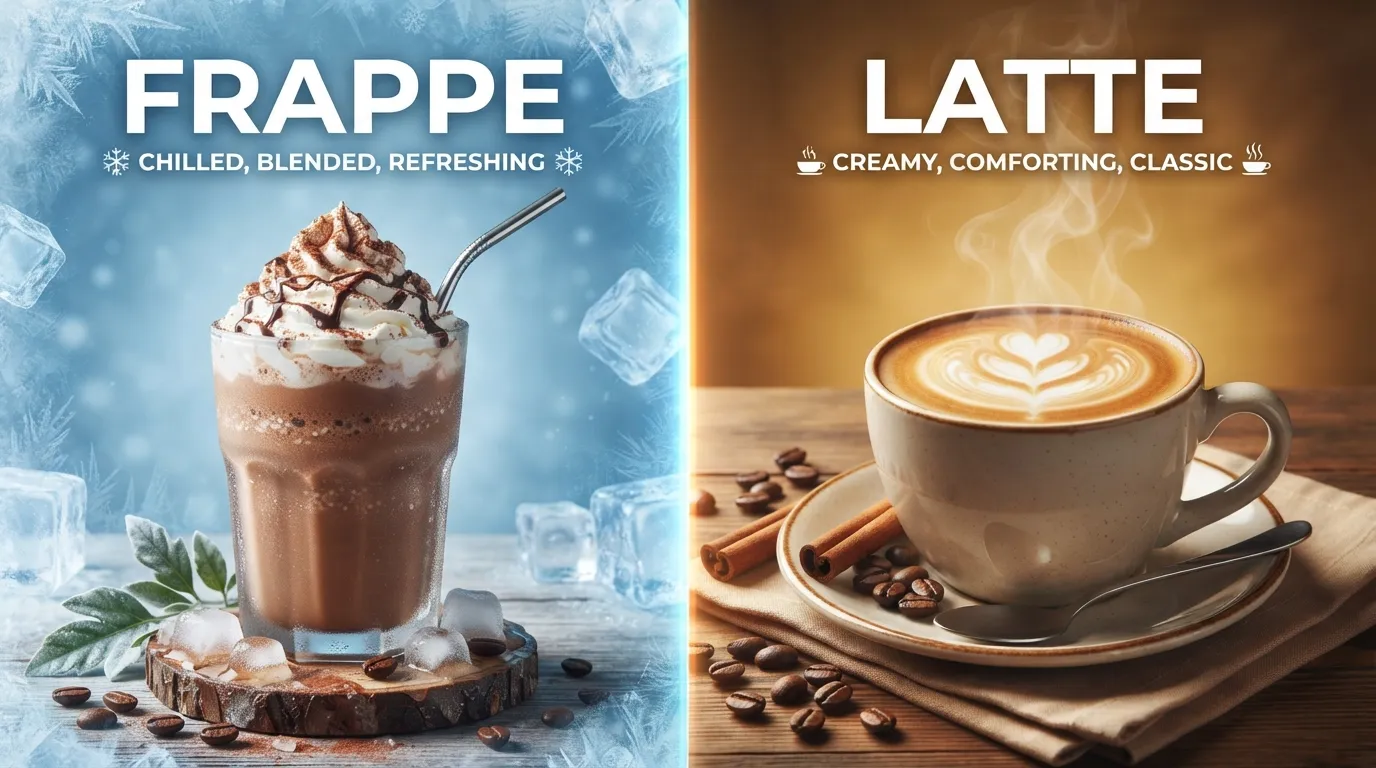
A frappe is a cold, blended coffee drink whipped until foamy, while a latte is a hot (or iced) espresso drink made with steamed milk, the difference between frappe and latte comes down to temperature, texture, and how the coffee is prepared.
Most people order a frappe when they actually want a latte, and a latte when they actually want a frappe. They’re not the same drink, and the mix-up can leave you disappointed at the counter.
Take Daniel. He walked into a café on a hot afternoon and ordered a “latte, but cold,” expecting something thick and blended like a milkshake. What he got was a smooth iced coffee with milk, nothing like the frothy, dessert-style drink he had in mind. He left confused, and a little annoyed, wondering why his “latte” didn’t taste anything like his friend’s drink from the same shop.
So what’s actually going on here? A frappe is a cold, frothy coffee drink, usually blended with ice. A latte is an espresso-based drink built on steamed milk. Once you understand the difference between frappe and latte, you’ll never order the wrong one again.
Key Difference
The core difference between frappe and latte is temperature and texture. A frappe is almost always cold and blended, giving it a thick, foamy body. A latte is traditionally hot, made by pouring steamed milk over espresso. Keep reading, we break down all 10 differences in plain, simple terms below.
Why Is This Difference Important to Know?
Ordering the wrong drink wastes your money and your time, especially if you’re in a rush. Baristas rely on customers knowing basic terms so they can make your order correctly the first time. Understanding the difference between frappe and latte also helps if you’re making drinks at home, the equipment and ingredients are not interchangeable. Whether you’re a casual coffee drinker or a home barista, this knowledge saves real frustration.
10 Points of Difference Between Frappe and Latte
1. Basic Definition and Meaning
A frappe is a cold, blended coffee drink, often topped with whipped cream. A latte is a hot espresso drink mixed with steamed milk and a thin layer of foam. Starbucks built its entire “Frappuccino” line around the frappe concept. Italian cafés, meanwhile, have served the latte for generations as a simple morning drink.
2. Origin and Main Components
The frappe traces back to Greece in 1957, made by shaking instant coffee with ice and water. The latte comes from Italy, built from two ingredients: espresso and steamed milk. A Greek frappe uses instant coffee as its base. An Italian latte always starts with fresh-pulled espresso.
3. Process: How It’s Made
A frappe is blended or shaken with ice until frothy and thick. A latte is made by pulling a shot of espresso, then pouring steamed milk over it. A café worker making a frappe reaches for a blender. A barista pulling a latte reaches for the espresso machine and a steam wand.
4. Time Involved
A frappe takes just a minute or two to blend and serve. A latte takes slightly longer, since the espresso shot and milk steaming both need careful timing. A busy coffee shop can pump out frappes fast during a summer rush. A skilled barista still needs 60-90 seconds to steam milk properly for a latte.
5. Flavor, Feel, and Output Quality
A frappe feels light, icy, and slightly sweet, almost like a coffee milkshake. A latte feels smooth and creamy, with a stronger coffee flavor up front. A teenager grabbing an afternoon treat often prefers the sweetness of a frappe. A coffee purist ordering a morning drink usually leans toward the bolder taste of a latte.
6. Primary Use Cases
Frappes are popular as a refreshing summer treat or dessert-style drink. Lattes are an everyday coffee choice, hot or iced, for a steady caffeine boost. College students often order frappes to cool down between classes. Office workers often order lattes as their regular morning routine.
7. Effect or Impact
A frappe often has less actual espresso in it, so the caffeine hit tends to be lighter, especially in sweetened versions. A latte usually has one or two full shots of espresso, giving a steadier and often stronger caffeine boost. Someone sensitive to caffeine may handle a frappe better than a double-shot latte.
8. Degree of Specificity or Precision
“Frappe” can mean different things depending on the country and the shop, Greek frappes and blended American frappes aren’t identical. “Latte” is more standardized worldwide, almost always meaning espresso plus steamed milk. A traveler in Greece ordering a frappe gets a different drink than one ordering a “Frappuccino” in the US. A latte, though, stays fairly consistent from Rome to New York.
9. Can They Replace Each Other?
Not really, swapping one for the other changes the whole experience. Someone craving a hot, comforting drink won’t be satisfied with an icy blended frappe. Someone wanting a light, cold treat won’t enjoy a heavy, hot latte instead. A cold latte (iced latte) is the closer cousin if you want espresso flavor without the blended texture.
10. Long-Term Results and Lasting Impact
Regularly drinking sugary frappes can add up in added calories and sugar over time. A latte, especially unsweetened, tends to be a lighter daily habit if you’re watching sugar intake. Someone drinking a whipped-cream frappe daily may notice it adds up more than a plain latte would over a month.
Nature and Behaviour
A frappe feels playful and indulgent, it behaves like a dessert wearing a coffee costume, made for sipping slowly through a straw on a hot day.
A latte feels steady and dependable, it behaves like a reliable morning companion, built for routine rather than novelty.
Why Do People Confuse Frappe and Latte?
Both drinks involve coffee and milk, so people assume they’re just hot and cold versions of the same thing. Menu boards don’t always explain the difference clearly, especially at smaller cafés. The word “frappe” itself is used loosely across different countries and coffee chains. Daniel’s mix-up at the café happened exactly because he assumed “cold latte” and “frappe” meant the same request.
Comparison Table
| Feature | Frappe | Latte |
| Definition | Cold, blended coffee drink | Espresso drink with steamed milk |
| Origin | Greece, 1957 | Italy, traditional espresso culture |
| Process | Blended or shaken with ice | Espresso shot topped with steamed milk |
| Duration | Quick to prepare | Slightly longer, needs steaming |
| Output | Light, icy, sweet | Smooth, creamy, stronger coffee taste |
| Main Use | Summer treat, dessert-style drink | Everyday coffee, hot or iced |
| Impact | Often lighter caffeine hit | Usually stronger, steadier caffeine |
| Interchangeable? | No | No |
| Long-term Result | Can add more sugar/calories | Lighter daily option if unsweetened |
| Similarity | Both coffee-based drinks | Both coffee-based drinks |
| Key Difference | Cold and blended | Hot espresso with steamed milk |
📌 Save this for later, bookmark this page or share it with someone who always mixes up frappe and latte.
Which Is Better and When?
A frappe is the better choice on a hot day when you want something cold, sweet, and a bit indulgent; think a beach day or a summer afternoon break. A latte is the better choice for a steady morning routine, especially when you want a stronger coffee flavor without sugar overload, like Daniel’s coworker who orders one every morning before her commute.
Quick Decision Guide
Choose a frappe if:
☑ You want something cold and blended
☑ You’re craving a dessert-style treat
☑ You don’t need a strong caffeine hit
☑ You’re drinking it slowly with a straw
Choose a latte if:
☑ You want a steady, everyday coffee
☑ You prefer a stronger espresso flavor
☑ You want it hot or a simple iced version
☑ You’re watching sugar intake
Still unsure? Drop your question in the comments , we answer every single one.
Metaphors and Similes
A frappe is a beach vacation in a cup: cold, playful, and a little indulgent. A latte is a warm handshake every morning: familiar, dependable, comforting. Comparing the two is like comparing a milkshake to a cup of tea; both satisfying, but built for very different moods.
Connotative Meaning
Frappe carries a positive connotation as a fun, refreshing treat; a negative connotation as “too sugary” or “not real coffee” among purists; and a neutral meaning as simply a cold, blended coffee drink. Example: “She treated herself to a frappe after her exam.”
Latte carries a positive connotation as cozy and sophisticated; a negative connotation as overpriced, especially tied to the “latte factor” spending joke; and a neutral meaning as just an everyday espresso-milk drink. Example: “He grabbed his usual latte on the way to work.”
Idioms and Proverbs
“Wake up and smell the coffee” fits naturally with the latte’s role as a morning ritual. “The best things in life are cold” could describe the appeal of a frappe on a hot day. We’ll coin one too: “frappe mood” [coined expression], meaning a craving for something cold, sweet, and coffee-flavored rather than a serious caffeine fix.
Frequently Asked Questions
Q1: What is the main difference between frappe and latte? A frappe is cold and blended, while a latte is traditionally hot and made with steamed milk poured over espresso. The texture, temperature, and preparation method set them clearly apart from each other.
Q2: Can a frappe be used instead of a latte? Not really. A frappe is thicker, colder, and often sweeter, while a latte has a smoother, stronger espresso flavor. If you want espresso taste without blending, an iced latte is the better swap.
Q3: Which is better: frappe or latte? Neither is universally better, it depends on mood and weather. Frappes suit hot days and dessert cravings, while lattes suit daily routines and a steadier coffee flavor, hot or iced.
Q4: How long does a frappe or latte last? Both are best enjoyed fresh, within 15-20 minutes. A frappe melts and separates quickly once blended, while a latte’s foam flattens and the drink cools if left too long.
Q5: Why do people mix up frappe and latte? Both involve coffee and milk, and menu names vary by café and country, which blurs the line further. Many people also assume “cold” and “frappe” are always the same thing, when that’s not quite true.
Real-World Importance
Knowing the difference between frappe and latte helps you order confidently at any café, anywhere in the world. It also matters if you’re making drinks at home, since the equipment and steps aren’t interchangeable. For anyone hosting a coffee bar at a party or event, picking the right drink for the right moment keeps guests happy.
Conclusion
A frappe and a latte both start with coffee, but that’s where the similarity ends. The difference between frappe and latte comes down to temperature, texture, and how each drink is prepared, one is cold and blended, the other hot and steamed. Once you know which one fits your mood, ordering becomes effortless.
Now that you know the difference, you’ll never mix them up again. Next time you’re at the counter, you’ll know exactly what to ask for.
Read More: Difference Between SN1 and SN2: What You Should Know

I’m Ayesha Sadiqah, and I’m passionate about answering one simple question: “What’s the difference?” Through clear comparison guides, I help readers understand commonly confused words, products, concepts, and everyday topics. My goal is to make complex ideas easy to understand with accurate, practical, and reader-friendly explanations.