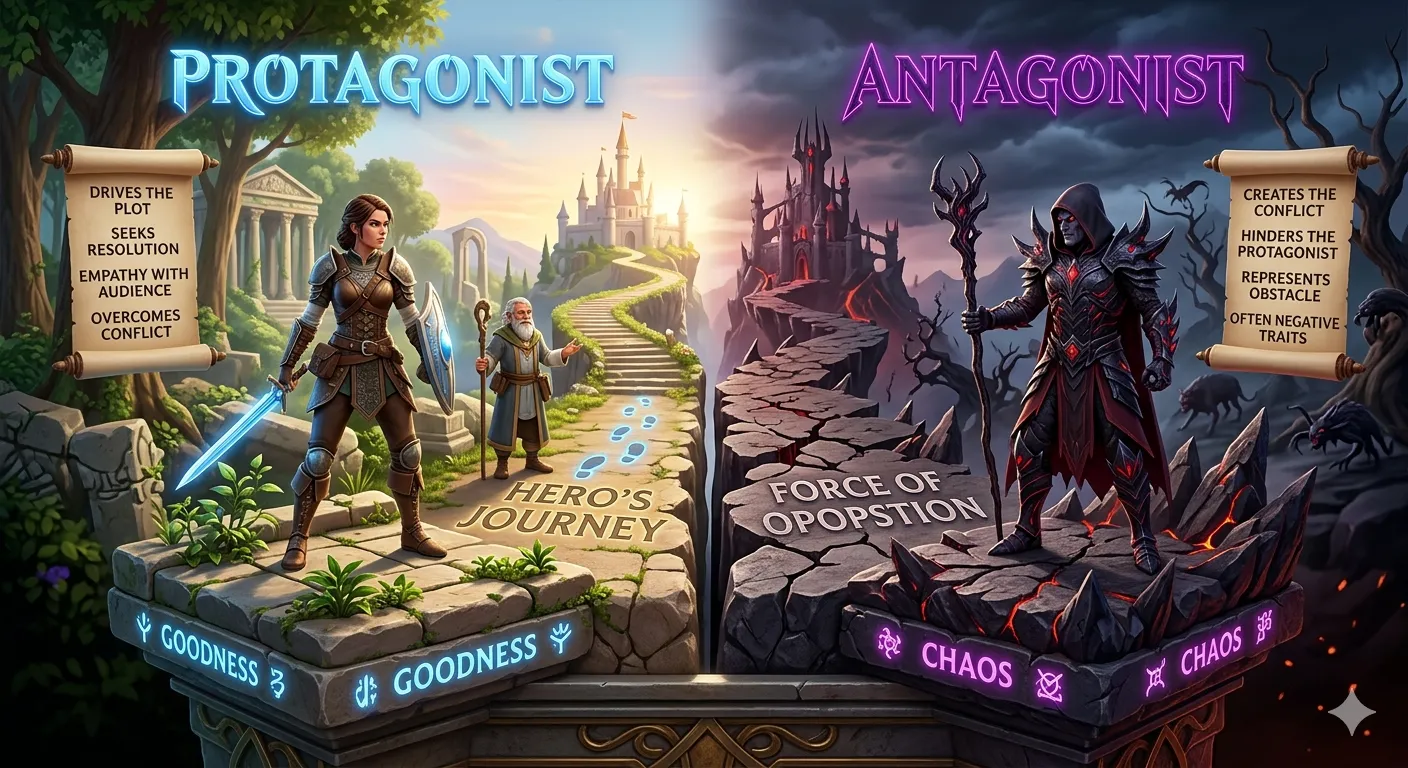
The difference between antagonist and protagonist is that the protagonist is the main character who drives the story forward, while the antagonist creates conflict by opposing their goals.
People often confuse the difference between antagonist and protagonist. Many assume the protagonist is always “good” and the antagonist is always “bad.” That is not true. These roles are about function, not morality.
In a school drama, Ali played the villain and thought he was the antagonist. Later, his teacher explained that an antagonist is simply the force that stands in the way of the main character. That lesson changed how he understood stories.
The difference between antagonist and protagonist is simple but important. One leads the story. The other creates the challenge. Together, they make any story interesting and meaningful.
Key Difference
The protagonist is the central character who moves the story forward with goals and actions. The antagonist is the force that blocks or challenges those goals. The difference between antagonist and protagonist is about direction, not good or bad behavior. Keep reading to explore all 10 differences in simple terms.
Why Is This Difference Important to Know?
Understanding the difference between antagonist and protagonist helps readers follow stories more clearly. It also helps students and writers build better characters. When you know who is driving the story and who is creating conflict, it becomes easier to understand movies, novels, and plays. This knowledge is useful in both learning and storytelling.
Linking Hook
If you want to learn more about how stories are built, check out our guide: Types of Characters in Literature (internal link: /character-types-literature). Now let’s break down the key differences in detail.
10 Points of Difference
Basic Definition and Meaning
The protagonist is the main character of the story. The antagonist is the character or force that opposes them. The difference between antagonist and protagonist starts with their basic role in the story.
Example: Harry Potter is the protagonist. Voldemort is the antagonist.
Origin and Role in Story
The protagonist is introduced as the focus of the story. The antagonist is created to create conflict for that focus. This role difference clearly shows the difference between antagonist and protagonist.
Example: Simba is the protagonist in The Lion King. Scar is the antagonist.
How They Drive the Story
The protagonist makes decisions and takes action to reach goals. The antagonist reacts by blocking those goals. This push and pull shows the difference between antagonist and protagonist in action.
Example: Frodo carries the ring forward. Sauron tries to stop him.
Presence in the Story
The protagonist usually appears throughout most of the story. The antagonist may appear often or only during key moments. This difference in presence highlights the difference between antagonist and protagonist.
Example: Katniss is present throughout The Hunger Games. President Snow appears as the opposing force.
Focus and Depth
Protagonists usually receive more emotional focus and development. Antagonists may or may not have a deep backstory. This difference adds depth to the difference between antagonist and protagonist.
Example: Spider-Man has full character development. The Green Goblin mainly represents conflict.
Purpose in the Story
The protagonist helps the audience connect emotionally with the story. The antagonist creates tension and obstacles. This functional role shows the difference between antagonist and protagonist clearly.
Example: Cinderella vs the stepmother. Batman vs Joker.
Effect on the Plot
The protagonist pushes the story forward through actions and choices. The antagonist slows progress by creating problems. This interaction defines the difference between antagonist and protagonist.
Example: Mowgli tries to survive. Shere Khan creates danger.
Moral Alignment
The protagonist is often good, but not always. The antagonist is often in opposition, but not always evil. The difference between antagonist and protagonist is about role, not morality.
Example: Light Yagami in Death Note blurs both roles. L acts as his opponent.
Can They Replace Each Other?
No. Both roles are necessary for a story to work. Without a protagonist, there is no main focus. Without an antagonist, there is no conflict. This shows a key difference between antagonist and protagonist.
Example: Batman stories need Joker. Harry Potter stories need Voldemort.
Long-Term Impact
The protagonist’s journey carries the message of the story. The antagonist shapes the struggles that lead to growth. This final difference between antagonist and protagonist shows how stories create meaning.
Example: Simba’s growth is the heart of The Lion King. Scar creates the conflict that drives it.
Nature and Behaviour
The protagonist is usually brave, focused, and goal-driven. They move the story forward with decisions and actions. The antagonist is resistant, strategic, and creates obstacles. They slow progress and add tension. Together, they balance the story and keep it engaging.
Why Do People Confuse Them?
People confuse them because they think “protagonist = hero” and “antagonist = villain.” This is not always true. Another reason is that movies often show clear good vs evil roles. In reality, roles are more flexible. Sometimes the antagonist may even be right, but still oppose the protagonist’s goal.
Comparison Table
| Feature | Protagonist | Antagonist |
| Definition | Main character | Opposing force |
| Role | Drives story | Creates conflict |
| Focus | Central focus | Conflict focus |
| Presence | Most of story | Varies |
| Emotion | Audience connection | Tension creation |
| Function | Moves story forward | Blocks progress |
| Morality | Often good/neutral | Often opposing |
| Replaceable? | No | No |
| Impact | Story growth | Story challenge |
| Key Difference | Lead role | Opponent role |
📌 Save this for later bookmark this page or share it with someone who mixes up protagonist and antagonist.
Which Is Better and When?
The protagonist is better when you want to follow a character’s journey and growth. For example, Harry Potter’s story focuses on his development. The antagonist is better when you want strong conflict and tension. For example, the Joker makes Batman’s story more exciting. Both are equally important for a strong story.
Quick Decision Guide
Choose Protagonist if:
☑ You are identifying the main character
☑ You want to follow the main journey
☑ You track decisions and goals
☑ You focus on emotional growth
Choose Antagonist if:
☑ You see opposition or conflict
☑ You identify obstacles
☑ You study tension in the story
☑ You track challenges to goals
Still unsure? Drop your question in the comments — we respond to every query.
Metaphors and Similes
The protagonist is like a traveler on a long road. The antagonist is like the storms and barriers along the way. They are like two sides of a chess game — one plans the move, the other tries to stop it.
Connotative Meaning
The protagonist represents hope, progress, and direction. They feel positive and inspiring. The antagonist represents challenge, resistance, and pressure. They may feel negative, but they are necessary for story depth. Together, they create balance between struggle and success.
Idioms and Proverbs
- “Every hero needs a challenge” stories need both roles.
- “No growth without struggle” protagonist grows through conflict.
- [coined expression] “Light needs shadow to shine” antagonist gives meaning to protagonist.
Example: The story proved that every hero needs a challenge.
FAQ Section
Q1: What is the main difference between antagonist and protagonist?
The protagonist is the main character, while the antagonist creates conflict against them.
Q2: Can an antagonist be good?
Yes, antagonists are not always bad. They only oppose the main character’s goal.
Q3: Which is more important in a story?
Both are equally important because stories need both focus and conflict.
Q4: Can a story have more than one protagonist or antagonist?
Yes, many stories include multiple main or opposing characters.
Q5: Why do people confuse them?
Because they wrongly assume protagonist means hero and antagonist means villain.
Real-World Importance
Understanding the difference between antagonist and protagonist helps you read stories, analyze movies, and write better fiction. It improves your ability to understand character roles and story structure in everyday media and education.
Conclusion
The difference between antagonist and protagonist is simple once you understand their roles. The protagonist is the main character who moves the story forward. The antagonist is the force that creates conflict and challenges that journey. Neither role is about good or bad — it is about purpose.
Both are needed to make stories meaningful and interesting. Without one, the story would not work. Now that you understand this clearly, you can easily recognize these roles in any book, movie, or play without confusion.
Read More:
Difference between SEM and TEM : What’ the Difference?

I’m Rubab, an SEO content writer specializing in high-quality comparison articles that simplify complex topics and highlight key differences with clarity and accuracy. My content combines in-depth research, proven SEO strategies, and a reader-first approach to deliver valuable insights across language, technology, health, food, and lifestyle topics.
🔍📈 Turning complex comparisons into clear, search-friendly content that informs, engages, and ranks. ✨🏆